By Federico Calabrese
Follow us on social networks to stay updated on the latest transfer market news: Instagram, Facebook e X
The Borussia Dortmund has long been one of the most iconic football clubs in the Bundesliga, not only for its sporting history but also for the solidity of its financial structure. In recent years, the club has shown a steady growth in revenues, consolidating its position in the European football landscape and proving that careful management can make a difference even in a sector often marked by unstable budgets.
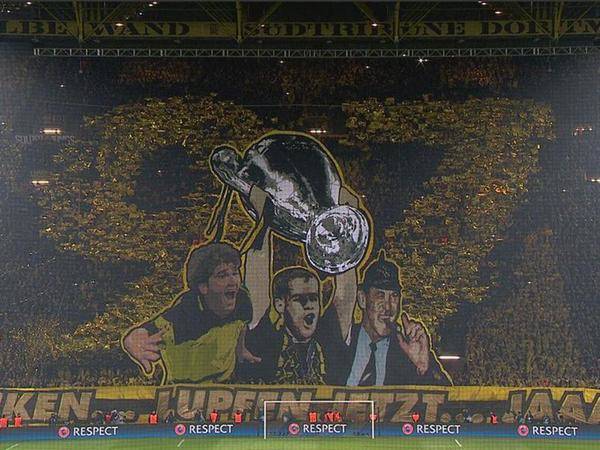
Borussia Dortmund’s Revenue
In 2024/2025, Borussia Dortmund achieved a record revenue of €526 million, marking an increase compared to €509 million in the previous year. This result is not by chance: it comes from a well-structured strategy combining matchday revenue, sponsorships, broadcasting rights, and player transfer activities. However, despite the increase in revenues, the club’s net profit fell to €6.5 million from €44.3 million in the previous period.
This decline was mainly influenced by a reduction in transfer revenue, following the high-profile sale of Jude Bellingham to Real Madrid, which had generated over €100 million in the prior period. Despite this drop in profit, the club’s financial position remains solid, with positive operating cash flow and unused credit lines amounting to €75 million, demonstrating its ability to withstand periods of lower liquidity.

Revenue Sources
Among the most significant sources of income, matchday operations play a central role. In 2024/2025, revenue from tickets and home games rose to €55.2 million, partly thanks to participation in the UEFA Champions League, which brought seven sold-out home matches, one more than the previous year. The influx of fans, combined with the historic passion of the “Yellow Wall,” helps make Signal Iduna Park one of the most profitable stadiums in Europe.
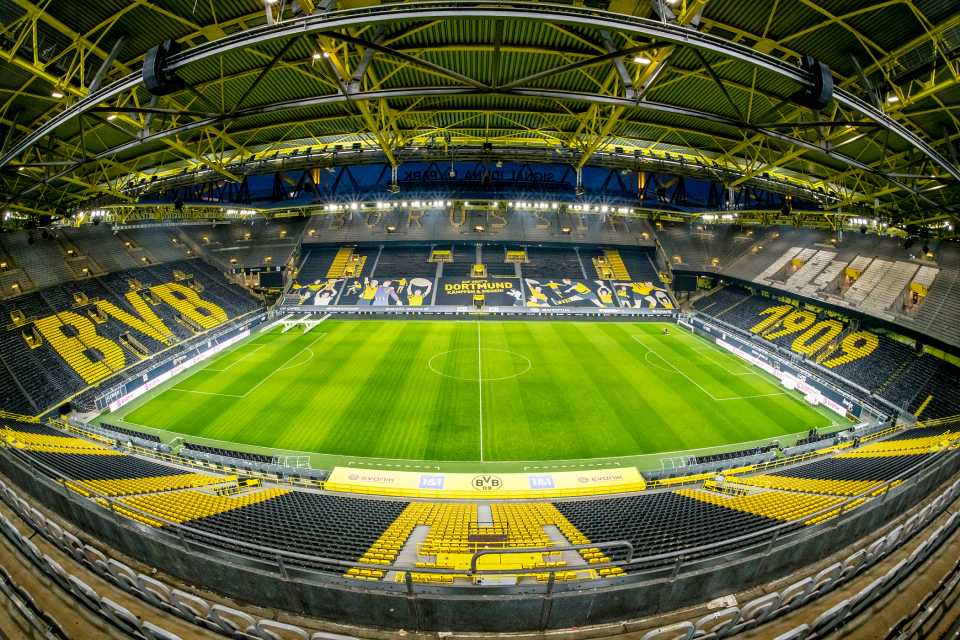
Sponsorships
Sponsorships also represent a key component of Dortmund’s budget. Evonik Industries AG, 1&1, and PUMA are among the main partners, with PUMA having extended its collaboration until 2034. In addition, agreements with Signal Iduna, holder of the stadium naming rights until 2031, and GLS, sleeve sponsor for the current season, further reinforce the club’s commercial framework.
Borussia Dortmund has also diversified its collaborations by establishing new strategic alliances, such as the partnership with Rheinmetall as a “Champion Partner.” However, not all partnerships have been smooth: in 2024, Dortmund ended an agreement with BlockDAG Network, a blockchain project, due to financial defaults by the partner, highlighting the importance of careful management of commercial alliances.
Broadcasting rights are another crucial source of income. Regular participation in European competitions, particularly the Champions League, significantly increases revenue from match broadcasts. In 2024/2025, reaching the quarter-finals of the competition provided a considerable economic boost, confirming the strong link between sporting and financial success.
The transfer market, while affecting net profit variably, remains a key component of Borussia Dortmund’s economic strategy. The sale of top young talents, as with Bellingham in the past, allows the club to reinvest in new players and maintain a balance between sporting competitiveness and financial stability.
Borussia Dortmund appears poised to maintain a prominent position both on the sporting and economic fronts. The club operates a diversified business model capable of generating revenue across multiple sectors and a network of strategic partnerships that can further strengthen its financial solidity. The main challenge remains prudent resource management and the ability to balance sporting expenses with economic sustainability, ensuring long-term and stable growth.
In summary, Borussia Dortmund represents a case of excellence in modern football economic management. The combination of a solid revenue strategy, careful sponsorship management, and the ability to leverage its sporting assets enables the club to compete at the highest level without compromising financial sustainability, proving that in football, as in economics, foresight and planning are essential to achieving lasting results.