By Andrea Caropreso
Index
Follow us on social media to stay updated with the latest transfer market news: Instagram, Facebook e X.
In an increasingly packed football calendar, domestic cups can sometimes be seen—especially by coaches managing their players’ energy—as the least appealing competition in terms of prestige and profitability. It is common practice to field second-string players to give the so-called starters a rest. However, there are differences among the top 5 European leagues, both in terms of appeal and club revenues.
The numbers of domestic cups
The FA Cup is the oldest and most prestigious sporting event in England. It’s a matter of tradition—something the football-loving and conservative English public would never give up. The reason is simple: it’s a competition open even to amateur clubs, and as if that weren’t enough, there are no seeded teams during the draw. Everything is left to chance, and even the richest club in England could end up playing in a remote suburb of London.
Paradoxically, however, the FA Cup generates less revenue per club compared to the DFB-Pokal, Germany’s national cup. The Football Association doesn’t need to “buy” the interest of top clubs—already wealthy thanks to Premier League TV rights—but rather aims to support smaller teams. In Germany, the DFB-Pokal can offer higher prizes for both big and small clubs thanks to a lucrative, centralized national TV deal.
Domestic Cup Prize Values – Top 5 Leagues
| Cup | Total Prize Pool | Winner’s Prize | Runner-up’s Prize |
|---|---|---|---|
| DFB-Pokal (GER) | €66 M | €4.32 M | €2.88 M |
| FA Cup (ENG) | €29 M | €2.3 M | €1.15 M |
| Coppa Italia (ITA) | €25.5 M | €7.1 M | €1.9 M |
| Copa del Rey (ESP) | €33 M | €1.2 M | €1.0 M |
| Coupe de France (FRA) | €8.6 M | €0.85 M | €0.45 M |
The Italian case
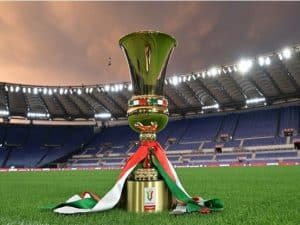
Quite the opposite, as shown, is true for the Coppa Italia. Among all domestic cups, the Italian one rewards big clubs the most—the further they progress (and they are helped by the seeded system), the bigger the paycheck. Compared to the FA Cup, its prestige and tradition are historically lower. The Federation therefore makes sure the big clubs are financially motivated to field their best teams and remain competitive for as long as possible.
Finally, in France and Spain, domestic cup values follow a similar trend—not so much in terms of total prize pool (€33 million vs €8.6 million), but in relation to the low TV rights value compared to the league. In France, the cup is worth just 4% of Ligue 1 TV revenue; in Spain, only 2% compared to La Liga’s billion-euro TV rights.
Cultural differences
This variation in domestic cup value is also cultural. Beyond English tradition, Germany shares a similar focus on redistributing wealth to smaller clubs. In both countries, prize money isn’t designed to incentivize big clubs to participate (as if it were a favor) but rather to integrate smaller clubs and help them grow—such as by hosting matches against teams like Manchester City or Bayern Munich.
In England, the FA Cup is a popular tradition—a way to stay connected to a football era that may no longer exist but survives through the competition. Culturally, the cup has always had a romantic and democratic aura, which is why the FA spreads prize money broadly, even to amateur teams living the dream of playing against Premier League sides. Fans are often more fascinated by underdog stories than by the trophy’s financial value.
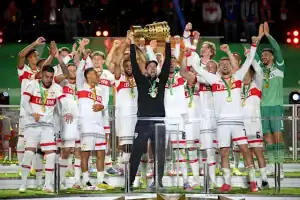
In Italy, the domestic cup is seen as a secondary objective for big clubs. The format—where the top teams enter only at the Round of 16—reinforces the perception that the trophy is “built” for them. This explains why prizes are concentrated in the final stages: it’s not about the fairytale of a small-town team but the clash between top sides.
Future prospects for domestic cups
In a football landscape dominated by major, revenue-generating competitions, there’s a risk of domestic cups disappearing—especially in countries less attached to them. This would be unfortunate, as domestic cups are the last bastion of an old-school football culture. To prevent this, innovation is needed.
Taking the Coppa Italia as an example, the Federation should align with the English system (and what other top leagues have done for years): no seeded teams, with everyone starting from the same round. A competition that’s already “scripted” only interests broadcasters holding the rights, while small-town football stories are the ones that inspire fans and get passed down through generations—just like in England.