By Andrea Caropreso
Index
Follow us on social media to stay updated on the latest transfer news: Instagram, Facebook and X.
Although both finished second last season, Inter and Arsenal share very little on the commercial and financial side. This is because, as is well known, the two clubs belong to two completely different football models, both in philosophy and in revenue generation. On one side, Inter must deal with the decline in Italian football’s appeal, while on the other, the Gunners can rely on the Premier League model and have just signed Viktor Gyokeres for more than €80 million.
Inter’s financial statements
In the financial report of June 30, 2024, Inter recorded consolidated revenues of €473 million, a record figure for the Nerazzurri and a sharp increase compared to the previous year. However, despite the increase in revenue, the accounts closed with a loss of about €36 million, though still a significant improvement from the over €85 million deficit of the year before.
In the latest financial year, covering 2025, Inter posted another record. Revenues of €567 million marked a unique achievement in the club’s history and in Serie A overall, with a net profit of more than €35 million.
Club | Year | Total Revenue | Main Costs | Net Result
Inter | 2023/24 | 473 | 464.5 | –36
Inter | 2024/25 | 567 | 482 | +35.4
The 2025 return to profit represents a turning point for Inter, but it is not enough to ensure that the restructuring path is complete, nor that the gap with Europe’s giants has been closed. On the contrary, the toughest challenge now begins: to turn one positive year into a new normal, consolidating progress and avoiding a Pyrrhic victory.
One of the hottest topics is the growth of commercial revenues. Like all major Italian teams, Inter still depends heavily on TV rights, which in 2024 guaranteed over €176 million, but that alone is not enough to compete with Europe’s giants (Premier League clubs receive nearly three times as much).
Arsenal’s financial statements
Arsenal closed the 2023/24 season with record revenues, confirming itself as one of the strongest clubs in the world. The return to the Champions League after six years of absence was the main driver of this growth, pushing total revenues to €715 million. This figure put the Gunners very close to the European super clubs, a sign of how the Premier League, as the leading commercial and broadcast competition, enables its clubs to grow exponentially.
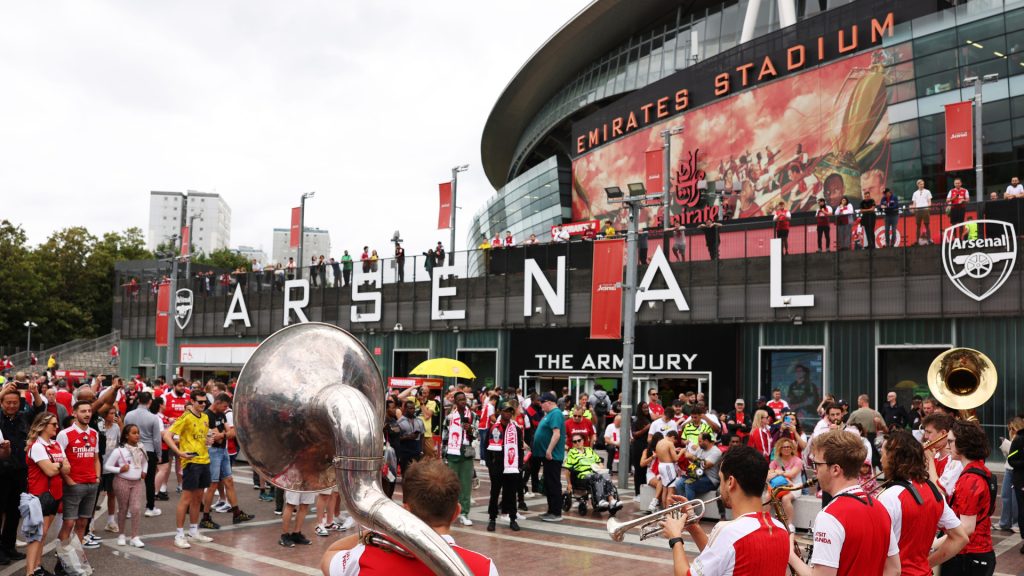
An analysis of the balance sheet highlights three key factors: the boom in TV rights (€304 million), matchday revenues from the Emirates Stadium (€153 million), and the growing importance of sponsorships and player trading.
Arsenal 2024 Financials
Item | Amount
Total Revenue | 715
TV Rights / Broadcasting | 304
Matchday (stadium) | 153
Sponsorships and Commercial | ~197
Player Trading | 61
Wage Bill | 380
Net Result | –20.5
There is, however, a downside. Specifically, costs: the wage bill reached €380 million, a 40% increase in just one year. This wage explosion meant the club reported a net loss of €20.5 million despite record revenues. A destiny shared by many English clubs, which on one side can afford lavish spending thanks to growing revenues, but on the other must deal with rising costs that could reach a breaking point.
An insurmountable gap?
Whenever such an analysis highlights the gap between the two business models, the question arises: what can be done to reduce the distance with English clubs? This issue was raised years ago by Andrea Agnelli, who, during an event, alluded to the existence of a Super League, with clear references to the Premier League. In the past 15 years, the Premier League has become so attractive to broadcasters and players alike that it is almost untouchable by other leagues.
Italian football must therefore find a way to industrialize itself in order to create a similar model. This requires the same ingredients applied across the Channel: vision, planning, and targeted investments. The starting point is infrastructure (such as stadium ownership, which Inter still lacks), but also the development of youth academies and the ability to make Serie A competitive again—a league that in recent years has leveled off, but downwards.
By Andrea Caropreso