Spanish stadiums have become much more than sports arenas: they are strategic assets, commercial engines, and urban landmarks. From multimillion-euro investments to the economic ripple effects across cities and regions, Spain’s football infrastructure reflects a broader transformation in the business model of the sport.
Follow us on social media to stay updated on the latest transfer market news: Follow us on social media to stay updated on the latest economics news: Instagram, Facebook and X.
Index
Investments and Revenues: The Numbers Behind the Game
In recent years, Spanish clubs and leagues have significantly increased investments in stadiums. According to the “Stadium Investment” sector report, revenues generated by stadiums for Europe’s top 20 clubs now account for 18% of total income, up from 16% in 2018/19.
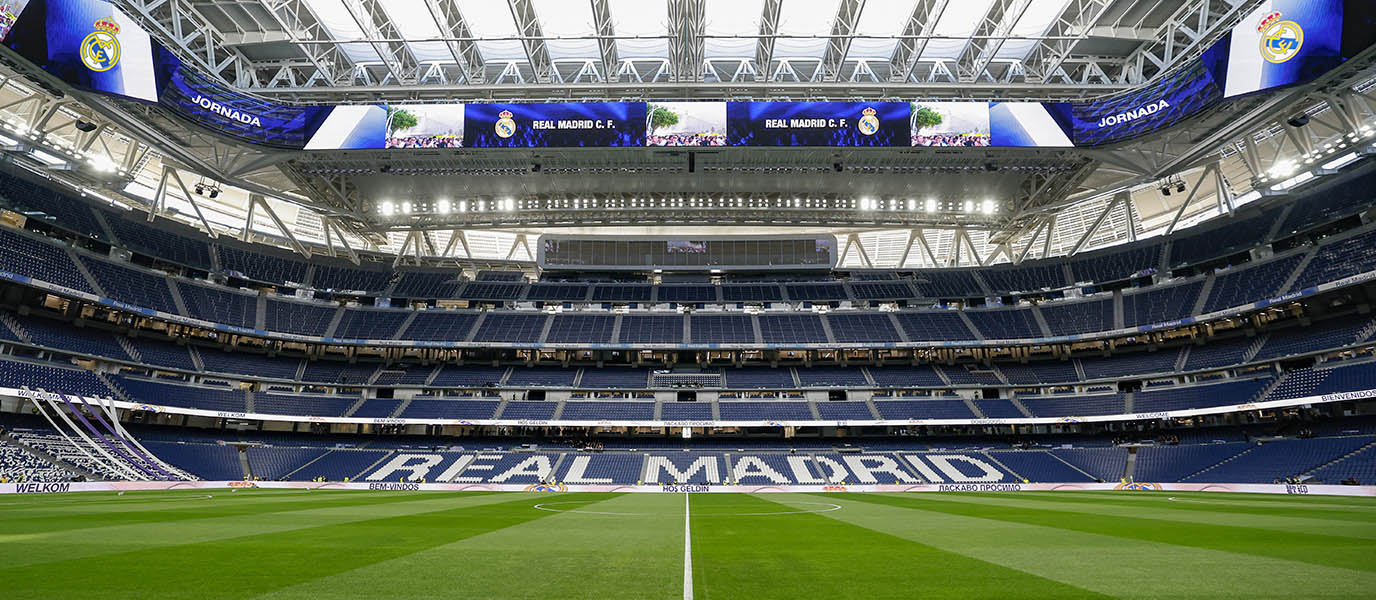
At the Santiago Bernabéu Stadium of Real Madrid, non-matchday income — from tours, museums, and retail — reached €43.9 million in the first half of the 2024/25 season, nearly matching the entire previous year’s figure. The Bernabéu renovation, estimated at €1.17 billion, is projected to generate up to €400 million annually once completed.
Across the league, LaLiga’s 2022-23 season generated €5.69 billion, a 17.8% increase year-on-year, driven by a 36.9% rise in matchday revenues and a 72% average stadium occupancy rate.
Overall, Spain’s professional football industry contributes about 185,000 jobs, €4.1 billion in tax revenue, and accounts for 1.37% of the national GDP.
“Stadium-Business” Success Stories

Real Madrid is not alone. Valencia CF’s Nou Mestalla project, backed by a €322 million investment, will feature a 70,000-seat capacity and is expected to triple annual revenue compared to the old stadium (€26.4 million).
In Castellón, the Estadi Castalia redevelopment — a €49 million investment — aims to expand capacity to 25,000 seats and include energy-efficient infrastructure.
Meanwhile, Cádiz CF’s Sportech City project combines sports and commerce, with an estimated €143 millioneconomic impact for the province.
Why the Transformation?
Modern stadiums are no longer measured by seats or matches played. They are multifunctional hubs designed for profitability and engagement. The key factors include:
-
Revenue diversification: As broadcasting rights plateau, clubs focus on hospitality, naming rights, retail, and events.
-
Urban and real-estate value: Stadium projects often drive urban renewal, with hotels, museums, and commercial areas boosting local economies.
-
Fan experience: Upgraded facilities increase attendance, spending per visitor, and brand loyalty.
-
Social and cultural impact: Stadiums act as catalysts for tourism, local employment, and civic identity.
Territorial and Social Impact
A LaLiga report shows that, in the 2016-17 season, matchday-related services (restaurants, transport, lodging) generated €2.4 billion in economic activity. Additionally, bar consumption linked to televised matches reached €1.23 billion, with 53% of that contributing directly to Spain’s GDP.
These figures prove that the “stadium effect” extends far beyond matchday — impacting tourism, commerce, and community engagement.
Risks and Challenges
Massive investments carry risks: debt accumulation, maintenance costs, and under-utilization. For mid-tier clubs, ensuring steady use of facilities outside matchdays remains a challenge. Moreover, ownership structures vary — many Spanish stadiums are still publicly owned, limiting clubs’ financial autonomy.
Spanish stadiums
Spanish football stadiums are at the core of the modern sports economy. With investments reaching hundreds of millions of euros, clubs are transforming their venues into commercial, cultural, and urban platforms. The infrastructure-revenue nexus is now essential to compete both on and off the pitch. For cities, stadiums are not just fan arenas — they are economic, social, and symbolic engines.
The challenge ahead is ensuring that this boom remains sustainable, balancing financial ambition with long-term stability.