By Federico Calabrese
Follow us on social networks to stay updated on the latest transfer market news: Instagram, Facebook e X
Index
Barcelona is much more than a club, as their famous motto “Més que un club” proudly proclaims. But in recent years, this symbolic greatness has had to face a tough economic reality — one made of debt, financial restrictions, and difficult decisions. After a particularly challenging financial period, the club is now making a determined effort to bounce back through a series of strategic moves that are gradually bringing stability back to its accounts.

Barcelona’s Financial Structure
First, it’s essential to understand how Barcelona is structured at a corporate level. Unlike many other top European clubs, Barcelona is not a traditional joint-stock company but rather a member-owned organization. Its “socis” — club members — elect a president and participate in general assemblies. This unique model comes with advantages in terms of identity and fan engagement, but also poses challenges when it comes to attracting capital or making fast financial decisions.

Revenue
During the 2024/25 season, the club recorded approximately €994 million in operating revenue. An impressive figure that reflects the strength of the Barça brand in global football. However, after accounting for taxes, amortizations, and other operations, the final result was a net loss of about €17 million. That said, this represents a clear improvement over previous years. Most importantly, the club closed the season with a positive operating result of around €2 million, a strong indicator that it is starting to regain financial balance — albeit a fragile one.
Key Challenges
One of the long-standing issues has been the wage bill. At its peak, Barcelona was spending well over 70% of its revenue on player salaries — an unsustainable percentage by any financial standard. Today, thanks to player departures and a more disciplined wage policy, that figure has been reduced to approximately 54%. This is a fundamental step toward long-term sustainability in the club’s cost structure.
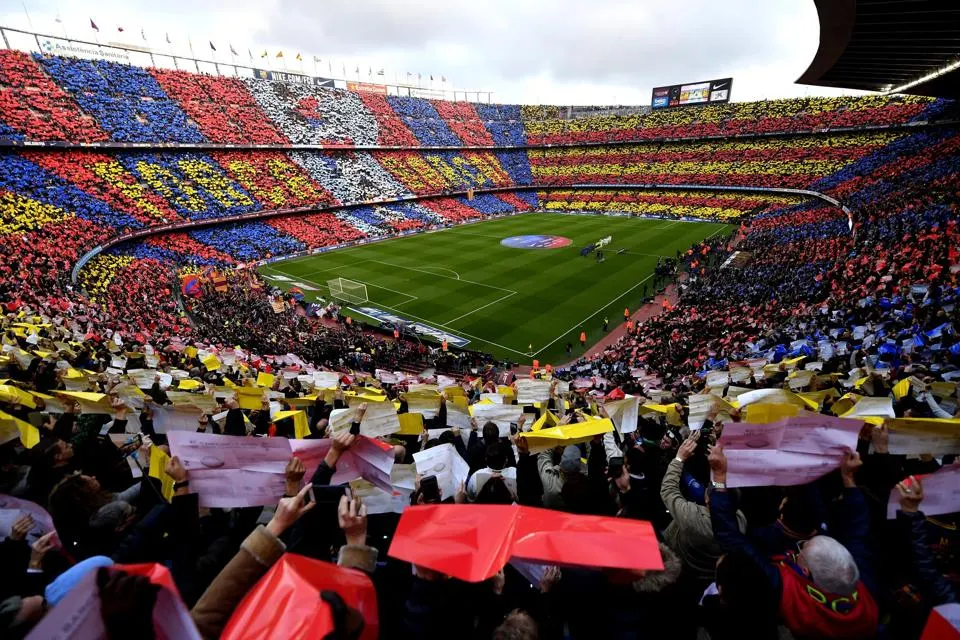
Several sources support Barcelona’s revenue stream. Matchday income, for example, took a temporary hit due to the ongoing renovation of Camp Nou, which forced the team to play at the Estadi Olímpic Lluís Companys. Despite this, matchday revenue still showed signs of growth, reflecting strong fan engagement even in a less favorable environment. With the return to Camp Nou expected for the 2025/26 season, a significant increase in stadium-related revenue is anticipated, boosted by a fully modernized facility.
Another key driver for the club is the commercial segment. In the most recent season, sponsorship deals reached record levels, generating €259 million. The renewed partnership with Nike, the growth of e-commerce, and a 55% increase in merchandise sales compared to the previous year all highlight the global power of the Barcelona brand. This isn’t just about football anymore — it’s about identity, lifestyle, and global reach. Barça sells emotion, heritage, and a footballing culture, and the international market continues to respond enthusiastically.
But the real cornerstone of Barcelona’s economic recovery lies in the Espai Barça project — an ambitious redevelopment of the Camp Nou area. The goal is to turn the stadium and its surroundings into a multifunctional hub, complete with commercial spaces, hospitality services, events, and more. The project involves a significant investment, with high costs and long-term timelines, but is expected to generate tens of millions in new annual revenue. To fund part of the initiative, the club issued over €400 million in bonds, restructuring related debt and pushing repayment deadlines as far as 2050. While this relieves short-term pressure, it increases long-term commitments.
It’s also worth mentioning that the club has relied heavily on so-called “financial levers” — selling future broadcasting rights and other assets to access immediate cash. While this strategy has provided breathing room, it also reduces future income and must be handled with extreme care. In this context, UEFA’s Financial Fair Play regulations have imposed further constraints, and penalties have followed. In 2024, Barcelona was fined €15 million for breaching financial sustainability rules.
Despite these obstacles, the club is looking ahead with cautious optimism. The return to Camp Nou represents a pivotal moment — not only in sporting terms but economically as well. The budget for the 2025/26 season is ambitious, with projected revenue exceeding €1 billion and a modest net profit, indicating a shift toward stable growth less reliant on extraordinary measures.
Still, the challenges aren’t over. The most important will be ensuring that current strategies remain sustainable in the long term. The club can no longer afford the aggressive management style seen before 2020, when debt levels soared and wage spending reached unsustainable heights. The direction taken in recent years is promising, but continuity and discipline will be essential.
Barcelona is a giant rising to its feet once again. The numbers suggest a possible recovery, though still in its early stages. If the team continues to perform on the field and management maintains the financial discipline shown over the past two years, Barça could return not only to winning trophies — but also to becoming a benchmark of sound governance in the modern football industry.