By Marta Elena Casanova
Follow us on social networks to stay updated on the latest transfer market news: Instagram, Facebook e X.
Index
As with every top-level football league, in Germany when the 2. Bundesliga season nears its end, attention goes far beyond just the scoreboard. Behind the celebrations, the embraces, and the flags that color the stadiums, there is always a fundamental aspect: the economic impact of promotion. In Germany, as in modern football worldwide, earning a place in the Bundesliga means much more than a sporting victory. It is a radical shift in the club’s finances—a leap that can profoundly transform the prospects of a society. Promotion here is a true gateway to a world of new opportunities and financial resources.
The Gateway to Top-Tier Football
The 2. Bundesliga, Germany’s second division, is already a competition with good visibility and a solid following, but the gap with the top flight is enormous. For example, in 2025, the Bundesliga’s national media rights package is worth over 1.1 billion euros per year, while the entire second division shares less than 15% of that amount. A club playing in the 2. Bundesliga earns on average 6 to 7 million euros from TV rights; once promoted, it can expect to receive at least 25 to 30 million euros in its very first season.
The German system for distributing broadcasting rights is based on four pillars: an equal share for all clubs, a share based on sporting results over the last five and ten years, a portion linked to the use of young talents, and a residual quota based on meritocratic criteria. This means that a promoted team—even if initially penalized by long-term rankings—immediately enters a completely different financial dimension.
Promoted Teams of 2024-25
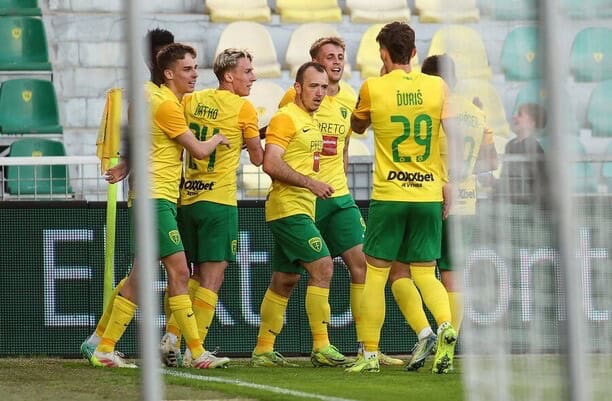
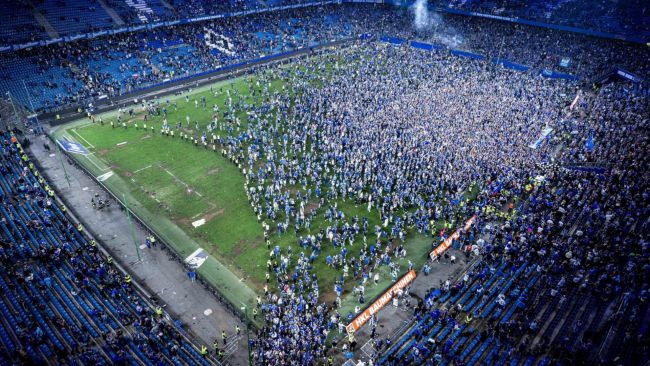
In the just-concluded season, two historic German football clubs celebrated promotion: 1. FC Köln and Hamburger SV. Both secured direct promotion, while the third-placed team lost in the playoffs. For clubs like these, returning to the Bundesliga means reactivating an economic machine fueled by sponsors, broadcasting rights, marketing, and especially fans.
Köln, for example, has a stadium with over 50,000 seats: in the second division, even with a good average attendance, it struggles to fill it and to fully capitalize commercially. In the Bundesliga, facing rivals like Bayern Munich, Dortmund, or Leipzig, everything changes: tickets sell months in advance, season tickets soar, and merchandising takes off. The same applies to Hamburg, which had been striving for promotion for years.
A Solid and Sustainable Model
Unlike many other countries, German clubs are often run with strict business criteria. The Bundesliga is one of the few European leagues where the majority of teams close their accounts in profit. Even newly promoted clubs, while increasing costs—especially to strengthen the squad—maintain sustainability thanks to careful resource management and an effective salary cap imposed by the market itself.
For example, in the 2023-24 season, Bundesliga clubs spent on average only 35% of their revenue on salaries, a figure that in Italy or England would be considered remarkable.
Comparing with Serie A
To better understand the value of promotion in Germany, it’s helpful to briefly compare it with Italy. A team promoted from Serie B to Serie A can receive around 23.5 million euros from TV rights, tens of millions more than in the second division. The jump is significant but less structured compared to the German model. Furthermore, the Italian system is less rewarding for clubs with a long-term vision and more dependent on seasonal fluctuations.
In the Bundesliga, promotion is the first step of a planned path, not just a one-off reward. Funds invested in youth development, academy, and infrastructure can be capitalized over time, thanks to a structure that guarantees stable and growing revenues. International visibility is also increasing: the DFL is working to raise the Bundesliga brand value worldwide through new media deals and strategic partnerships.
In short, climbing to the Bundesliga is not just a sporting dream. It’s an economic revolution. Budgets change, objectives shift, and the club’s scale transforms. All this without losing sight of sustainability, local roots, and the sporting project. Perhaps this balance is why German football, despite its ups and downs, remains a model of harmony between business and passion.
In Germany, promotion doesn’t just mean moving up a league—it means building a future on solid foundations.
By Marta Elena Casanova