By Federico Calabrese
Follow us on social networks to stay updated on the latest transfer market news: Instagram, Facebook e X
Index
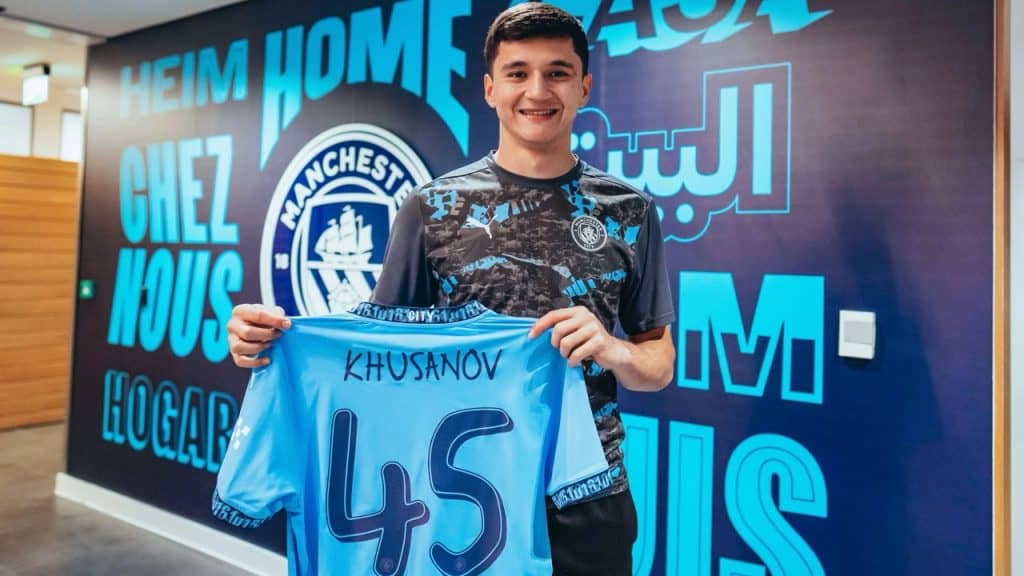
Manchester City, an English football club based in Manchester, is now one of the most powerful and influential economic forces in global football. Its transformation from a mid-level team to a European giant was mainly driven by foreign ownership and modern financial management focused on revenue maximization and infrastructure development.

The Transformation of Manchester City
Until 2008, Manchester City was considered a second-tier club in the English Premier League, often overshadowed by their city rivals, Manchester United. The economic and sporting turning point came in the summer of 2008, when Sheikh Mansour bin Zayed Al Nahyan, a member of the Abu Dhabi royal family, purchased the club through the Abu Dhabi United Group. The deal, valued at around £210 million, marked the beginning of a new era.
In 2014, the club came under the management of City Football Group (CFG), a global sports holding that now controls several clubs around the world, including New York City FC (USA), Melbourne City FC (Australia), Girona FC (Spain), and many others. CFG expanded the business model beyond just the English team, embracing a multi-club ownership model, now replicated by others like Red Bull and INEOS.

Manchester City’s Facilities
One of the cornerstones of Manchester City’s economic strategy is infrastructure investment. The club developed a state-of-the-art sports complex, known as the Etihad Campus, located next to the Etihad Stadium. The campus includes:
-
First-team training facilities
-
Youth academy (City Football Academy)
-
Cutting-edge medical and science facilities
-
Operational headquarters of both the club and City Football Group
The initial investment in the Etihad Campus was around £200 million, but it brought long-term benefits: reduced dependence on external facilities, attraction of young talent, and the ability to offer integrated sporting and commercial services.

Where Manchester City Earns
Manchester City generates billions of pounds through a highly diversified business model. According to the Deloitte Football Money League 2025 (updated to the previous fiscal year), the club ranks among the top three globally by revenue, exceeding €800 million annually. Key revenue sources include:
-
Commercial revenue is the largest share. In 2023/24 alone, the club earned over £350 million from sponsors, merchandising deals, and strategic partnerships.
The main sponsor is Etihad Airways, which also gives its name to the stadium and campus. Other major sponsors include Puma, Nissan, Xylem, and OKX. Additionally, CFG can sell commercial packages involving multiple clubs in the group, optimizing global brand exposure.
Thanks to the Premier League, one of the most lucrative leagues in terms of TV rights, Manchester City earns £150–180 million annually. Added to this are UEFA broadcasting rights, especially during long Champions League campaigns like the 2023 winning season, which generated over €100 million from UEFA alone.
Despite the Etihad Stadium having a capacity of around 53,500, smaller than other European venues, constant fan attendance and VIP areas significantly boost matchday and hospitality revenues. Annual matchday income is around £50–60 million, a figure that is growing thanks to expansion plans.
The club has built a virtuous youth development system, especially via the City Football Academy. Players not used in the first team are often loaned or sold for significant profits. In 2022 and 2023, City generated over £100 million annually in player sales without compromising sporting competitiveness.
One of the criticisms aimed at the club has been its alleged Financial Fair Play violations. UEFA investigated irregularities, but in 2020 the Court of Arbitration for Sport (CAS) overturned its European ban. However, the Premier League is still investigating over 100 alleged financial breaches.
Nevertheless, the club now presents balanced financial statements. Manchester City has posted net profits in recent reports, reflecting managerial maturity and a self-sufficient financial structure—unlike the early years of heavy spending.
Today, Manchester City is a hybrid model of sporting investment and global industrial strategy. It doesn’t just manage a team, but operates as a sporting and commercial ecosystem where infrastructure, branding, and global presence are as vital as on-field performance.
However, replicating this model is not easy. It requires substantial initial capital, long-term vision, and advanced managerial skills. Manchester City’s success shows that modern football, to compete at the highest level, must integrate with global economic dynamics and multi-level business strategies.