Curated by Federico Calabrese
Follow us on social media to stay up to date with the latest transfer news: Instagram, Facebook, and X.
The Era of Petrodollars
Never before has European football experienced such a profound financial revolution, largely driven by the so-called petrodollars flowing in from the Gulf region. This influx of money is transforming the sport, flooding the market with billion-euro investments that go beyond the pitch—extending into politics and economic diplomacy.
Petrodollars: Unmatched Financial Power
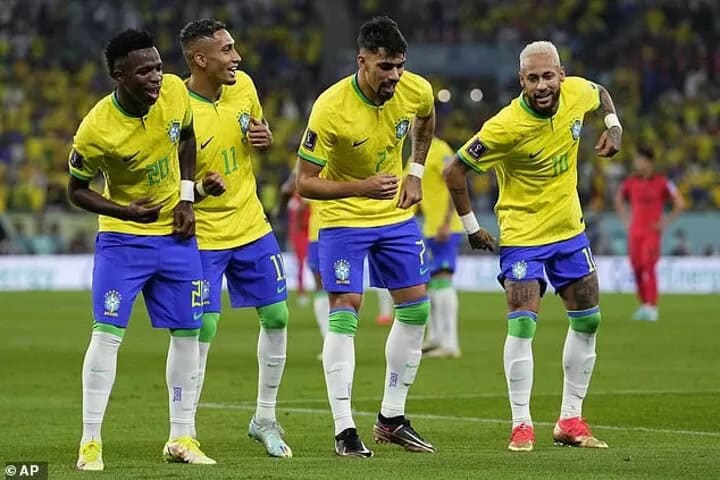
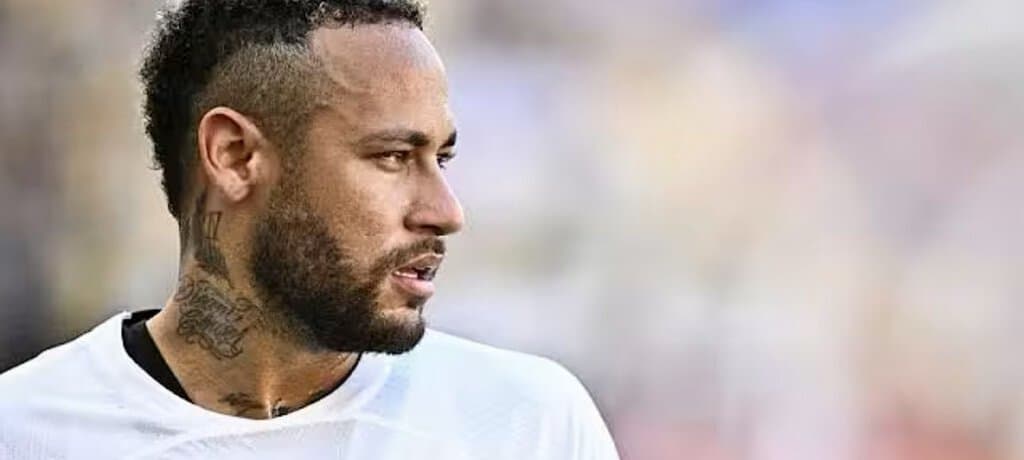
The clearest example comes from France, where Paris Saint-Germain (PSG), owned by the state-run Qatar Sports Investments (QSI), has spent around €2.3 billion in transfer fees since 2011. Among the most notable deals are the record-breaking contracts for Neymar (€222 million) and Mbappé (€180 million).
In the same period, Saudi Arabia’s Pro League (SPL) has spent nearly $3 billion over the past three years, with a gross outlay of $957 million and a net of $907 million, according to Deloitte.
QSI, the sole shareholder of PSG since 2012, has used the Parisian club as a global prestige tool, with their Champions League victory in May 2025 marking the peak of a fourteen-year strategy focused on both sporting success and brand image.
Petrodollars: The Numbers
In Saudi Arabia, the Public Investment Fund (PIF) allocates up to $2 billion annually to sports initiatives, as part of the broader Vision 2030 plan aimed at economic diversification.
Petrodollars have triggered a significant escalation in transfer values. In 2023 alone, the SPL signed 94 foreign players—37 of them from Europe’s top leagues—with $312 million spent on Premier League players alone.
But the investment doesn’t stop with players. Several new 60,000-seat stadiums are expected to be completed by 2028. Even the World Padel Tour was acquired by QSI, and in recent months, Saudi Arabia has embraced padel in full force.
The crisis of the traditional European football model is becoming more and more evident. The Premier League is trying to respond by generating significant revenue, but Financial Fair Play rules are pushing clubs toward innovation.
Gulf sovereign wealth funds are also influencing global sports policy. Following the PIF’s acquisition of Newcastle United, a paradox emerged: the fund indirectly finances rival clubs through its stake in the Club World Cup, generating revenue for competitors while Newcastle remains constrained by internal regulations.
Moreover, Darwin Núñez’s recent €53 million transfer to Saudi club Al-Hilal brought fresh capital into Liverpool’s accounts and sparked new market dynamics.
Where Are We Headed?
The 7 incredible powers of petrodollars in European football highlight how sport has become the preferred arena for global economic, cultural, and political strategies. Petrodollars have turned clubs into geopolitical tools, leagues into arenas of soft power, and even reshaped the rules of the market. Football is now a pillar of the global economy—and in the years ahead, we’ll increasingly witness the intersection of sport, diplomacy, and power.
This isn’t just a financial evolution of the game—it’s a full-on paradigm shift. Clubs are no longer local entities with sporting ambitions: they’ve become strategic global assets, managed by sovereign wealth funds and used to project international influence, gain public favor, and forge alliances. In this new context, the boundaries between sport, politics, and economics are more blurred than ever.
Arab financial power has already proven capable of altering the historical balance of European football, destabilizing long-standing models and imposing new logics. International football institutions like UEFA and FIFA find themselves in an ambiguous position: on one hand, they benefit from the money and media attention, while on the other, they’re under pressure to regulate a system that risks becoming unsustainable—or worse, unfair and non-meritocratic.
But the issue goes beyond the pitch—it’s also reflected in how fans perceive the game. For many, football is identity, culture, history. Seeing clubs bought by foreign funds, with seemingly endless resources, can stir mixed emotions. There’s excitement for renewed competitiveness, but also fear that football may become a toy in the hands of global financial power.
The future of football will be shaped across multiple fronts: government policy, the role of sports institutions, fans’ reactions, and the adaptability of traditional clubs. Petrodollars have ushered in a new era—one full of challenges, but also opportunities. Understanding and analyzing these trends is the first step toward imagining the kind of football we want in the coming decades: one dominated by capital, or one that can combine passion, identity, and financial sustainability.
Either way, the message is clear: those who control the money, today, control the ball.