By Federico Calabrese
Follow us on social networks to stay updated on the latest transfer market news: Instagram, Facebook e X
Index
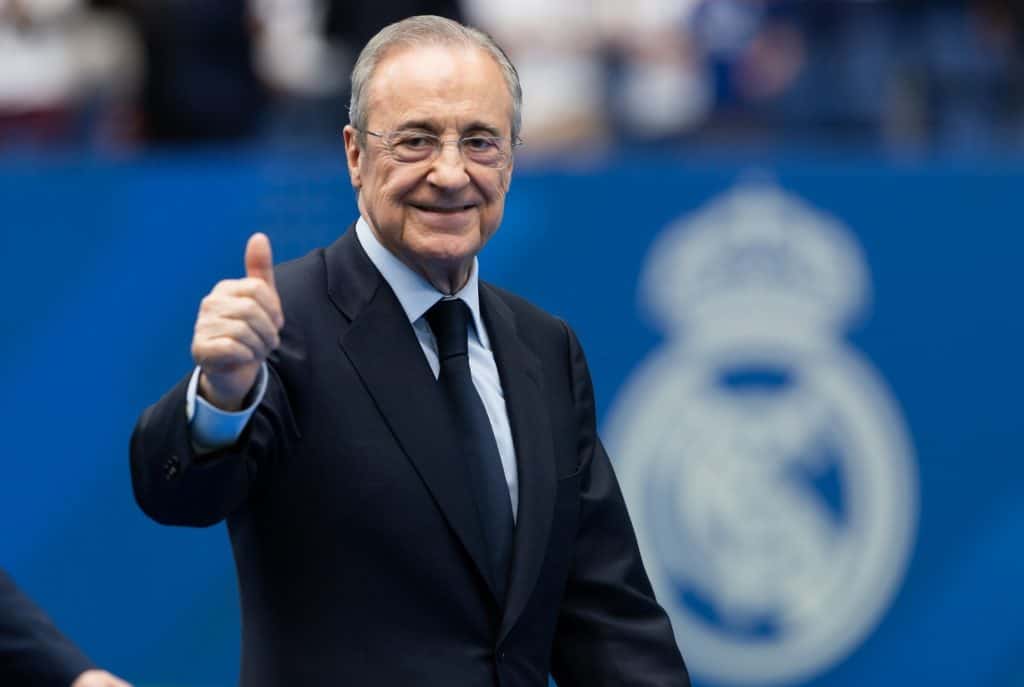
Real Madrid is not only one of the most successful football clubs in history; it is also one of the most financially solid and profitable organizations in the global sports landscape. In recent years, under the leadership of Florentino Pérez, the club has built an economic model that combines discipline, ambition, and adaptability, securing a position of leadership not just on the field but also in financial terms.

Real Madrid’s Financial Structure
During the 2024/25 season, Real Madrid reached a historic milestone, surpassing €1.18 billion in operating revenues for the first time in its history. This result confirms the growth trend established in previous years, when the club had already surpassed €1.07 billion. On a global scale, no other club recorded similar figures, and the Deloitte Football Money League once again ranked Real Madrid as the football club with the highest revenues in the world.
This growth is based on three fundamental pillars. The first is the commercial area, which includes sponsorships, merchandising, and licensing. The Real Madrid brand is one of the most recognizable worldwide, and the club has fully capitalized on its image by securing international sponsorship deals and multiplying revenue streams. The second pillar is the stadium-related activities.

The Santiago Bernabéu
The renovated Santiago Bernabéu, whose redevelopment project exceeded €1.3 billion in investment, is no longer just a sports facility. It has become a multifunctional center capable of hosting concerts, events, tourist experiences, and corporate activities. The stadium’s new features have significantly increased so-called “match day” revenues and attracted new income sources.
The third pillar lies in broadcasting rights and participation in football competitions, particularly the UEFA Champions League. However, this area has shown a slight decline, due to UEFA’s reform of prize distribution and a drop in revenue from La Liga, which reduced the contribution of broadcasting to the overall income.
In terms of profitability, Real Madrid remains one of the most efficient clubs. The EBITDA (Earnings Before Interest, Taxes, Depreciation, and Amortization) for the 2024/25 fiscal year exceeded €240 million — a figure never before achieved by the club. This number is even more significant considering that it was reached despite major investments, not only in the stadium but also in the squad and infrastructure.
Net income after taxes was also positive, with a profit of over €24 million — an improvement over the previous year. This shows how the club has maintained responsible financial management, avoiding the imbalances that often affect even the most prestigious sports organizations.

Spending and Wages
One of the most strategic decisions by the Madrid board has been to control wage spending. The ratio of salaries to revenues has remained around 43%, a figure significantly lower than the European average among top clubs, which often approaches 70%. This financial discipline has allowed the club to allocate resources to other areas while still maintaining a highly competitive squad at the international level.
From a balance sheet perspective, the numbers are equally solid. As of June 30, 2025, Real Madrid reported a net equity of over €590 million and a liquidity position exceeding €165 million. Net debt — excluding the stadium project — was almost zero, with a debt/EBITDA ratio close to nil.
This means the club could theoretically pay off all its debts using just one year of operating profit — a rare indicator in European football. Naturally, the Bernabéu redevelopment has created a specific debt of over €1.1 billion, but this is structured as long-term financing and is expected to be repaid through revenues generated by the upgraded venue.
What makes Real Madrid’s financial strategy particularly noteworthy is its long-term vision. The club clearly sees the stadium as the centerpiece of its future economic model. The goal is not only to increase ticketing revenue but to transform the Bernabéu into a year-round commercial, cultural, and entertainment hub, attracting visitors and sponsors even in the absence of matches.
Alongside this vision is an aggressive international brand expansion policy. Real Madrid is active across Asia, Latin America, the United States, and the Middle East, with increasingly targeted marketing and merchandising operations. The club’s reputation, bolstered by consistent on-field success, continues to strengthen its commercial value year after year.
Despite its financial strength, the club must face certain challenges. First, there remains a degree of dependence on sporting results — a disappointing season could impact prize money, broadcasting rights, and sponsorships. Furthermore, the global economic climate and the changing dynamics of the football market — increasingly influenced by foreign investors, sovereign wealth funds, and emerging leagues — require Real Madrid to stay vigilant and competitive not only on the pitch but also in boardrooms.
Another delicate matter concerns the club’s ownership model. Real Madrid is still controlled by its members — the “socios” — who elect the president and do not allow external investors. On the one hand, this guarantees stability and a strong identity; on the other, it limits access to fresh capital, especially in a global context where most other top clubs are backed by billions in private investment. There have been rumors of a possible partial opening of the model, but nothing official has been confirmed.
Real Madrid’s financial structure stands as a model of effective economic management in modern football. With massive revenues, strict cost control, forward-thinking investments, and a long-term strategy, the club is not only a sporting powerhouse but also a financial one. The ability to maintain this balance in the coming years will be crucial to continuing its dominance — both on the field and in the books.