By Andrea Caropreso
Index
Follow us on social media to stay up to date with the latest news and exclusives about international football: Instagram, Facebook and X.
We’ve seen them triumph in La Liga and the Copa del Rey, and enjoy an extraordinary Champions League run that ended only in the semi-finals. However, what has sparked the most debate in recent years at Barcelona is the club’s financial situation, which has been in the red since Bartomeu’s presidency.
It’s a story that started long ago, with recent consequences stemming from the pre-Covid era, during which Barcelona became heavily indebted. On the one hand, this led to an increased focus on young talents from La Masia, such as the phenomenon Yamal, but on the other hand, it plunged the club into an unprecedented crisis.
The Situation
Over the years, Barcelona has been involved in multiple scandals related to player registrations — not just of stars, but also of minors, with at least ten cases between 2009 and 2013. One such case was Neymar. Then-president Rosell claimed the purchase cost €57 million, but the real figure — due to unclear clauses and money funneled to a company owned by Neymar’s father — was closer to €95 million.
These maneuvers caught the attention of UEFA and La Liga, putting Barcelona at risk of a potential transfer ban. Bartomeu’s presidency only worsened the situation — as club icon Lionel Messi himself has said. In an attempt to avoid a transfer embargo, Bartomeu went on a spending spree: Suarez, then Coutinho and Dembélé, each for over €100 million.

Eventually, the deficit reached €-640 million. The pandemic was the final blow to Barcelona’s already suffocating finances. By 2022, Messi had to leave because the club could no longer afford him, and several other players couldn’t be registered. A disastrous legacy was left in the hands of new president Laporta, who has had to perform financial acrobatics just to register top players. The latest: Dani Olmo.
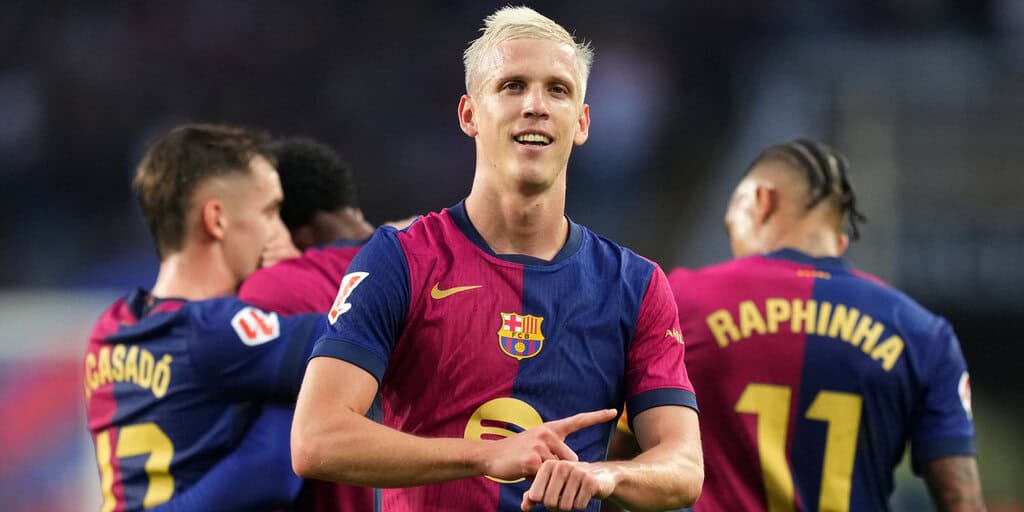
Olmo, who scored one of three goals in the 2025 Champions League semi-final, was just the latest in a line of complicated signings, joining names like Koundé, Gündoğan, and others. By January, the club still hadn’t provided sufficient financial guarantees to comply with the limits imposed by Spanish FA president Javier Tebas, leaving Barcelona once again under scrutiny.
La Liga’s Financial Rules
It’s worth highlighting the financial constraints La Liga imposed after the pandemic exposed a Pandora’s box of debt that clubs had been accumulating in pursuit of top players.
Tebas’s new financial policy focuses on:
-
Revenue-to-expenditure ratio (you can only spend what you earn)
-
Spending limits (caps on salaries and transfer fees)
-
Capitalization requirements (a club’s net worth equals its assets—such as real estate, TV rights, sponsorships—minus liabilities like supplier debts or bank loans)
-
Debt monitoring

In this light, it’s clear why Barcelona struggled to register new signings. Yet it’s also clear how they always manage to find a way to get their players registered.
According to the latest financial report (2024), the club closed with a €91 million loss. However, revenue has been rising, thanks to the new Camp Nou and Nike sponsorship. Commercial revenue grew from €374 million to €446 million last year and is expected to surpass €500 million this year due to Champions League earnings and sponsorship deals.
What Future Awaits?
The question now is whether Barcelona will ever escape the trap it created for itself. The answer isn’t certain, but based on the path taken, one might cautiously say yes. The club already sold 15% of its La Liga TV rights for the next 25 years to Sixth Street. To that, add revenue from Spotify (which now names the new Camp Nou) and VIP boxes at the stadium (which were used as a creative workaround to register Olmo).
Still, to ensure long-term financial stability, Barcelona needs a lasting plan. It can no longer afford to keep patching holes — this is the result of years of poor financial decisions, and now the club is a prisoner of its own mistakes.
By Andrea Caropreso