By Federico Calabrese
Follow us on social networks to stay updated on the latest transfer market news: Instagram, Facebook e X
Index
In the landscape of Italian football, Hellas Verona has always represented a strong identity — deeply rooted in its territory, yet capable of resonating beyond regional borders. A club that has made the passion of its fans and the historical significance of its colors into a recognizable brand. In recent years, this identity has been further strengthened through a series of strategic partnerships, particularly with technical and commercial sponsors who support the team not only on the pitch but also in building its broader image.
Verona’s Sponsors
Since 2023, the role of technical sponsor has been held by Joma, a leading Spanish company in the sportswear industry. The partnership replaced the previous one with Macron and, from day one, has been based on two core principles: respect for tradition and a focus on innovation.
Joma kits are not only aesthetically faithful to the club’s historic colors and symbols — such as the mastiffs, a heraldic emblem of Hellas — but also incorporate cutting-edge technical features. The shirts are made with recycled materials and include micro-mesh inserts in high-sweat areas to ensure comfort and breathability.
The stitching is flat-locked to minimize friction during matches, and the crests are applied using modern technology, making them more durable and lightweight. There’s also an emotional touch: inside the collar, phrases like “Alé Verona” or “Per sempre gialloblù” can be found, reinforcing pride and attachment to the jersey.

The Nature of the Partnerships
Alongside the technical supplier, one of the most visible and strategic elements is the main shirt sponsor, the logo displayed prominently on the players’ chests. For the 2025/26 season, this role is filled by Aircash, a Croatian fintech company rapidly expanding across Europe.
Aircash is a European-recognized electronic money institution offering a wide range of digital services, including money transfers, payments, and its own prepaid Mastercard. Its decision to partner with Verona is no coincidence: for the company, it represents a strategic move to strengthen its presence in the Italian market; for the club, it signals an embrace of a modern, digital-oriented entity that reflects Verona’s ambition to grow and innovate beyond the football pitch.
The Hellas Verona Ecosystem
But it doesn’t stop there. The universe of Hellas Verona’s sponsorships extends far beyond just the matchday kits and into other areas of the club. Dolomiti Energia, for instance, is the official training wear sponsor, with its branding featured on the first team’s training kits. Having an energy company committed to sustainability and ecological transition aligns well with the modern image the club aims to project.
The youth sector is also supported by a network of sponsors contributing meaningfully to the development of young talents. Notably, Forno Bonomi serves as the main sponsor for the youth academy, while brands such as Primamano, Ottica Lux, and De Carli take on roles as co-sponsors, sleeve partners, or back-of-shirt sponsors — providing not just financial support, but also added visibility and structural backing.
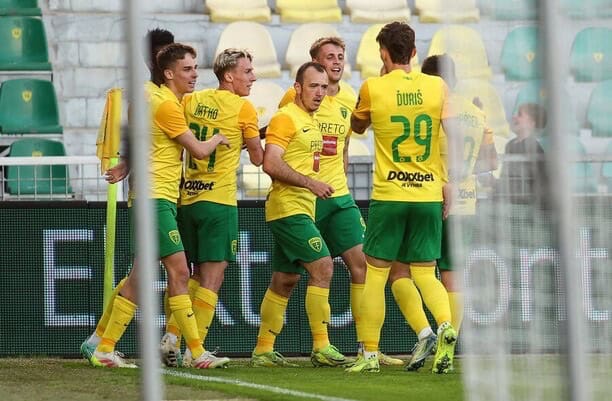
On the official matchday jersey, in addition to the Aircash logo and the Joma branding, several other sponsors reinforce the link between the club and both the local and national business fabric. For example, Sinergy Luce e Gas continues to be one of the club’s long-standing partners, while companies like Conforama, Vetrocar, and Divalia confirm their trust in the Hellas project by becoming prominent not only on the kits but also in the club’s broader communications strategy through advertising campaigns, events, and community initiatives.
This network of collaborations speaks volumes about the current identity of Verona. It’s not just about logos on a shirt, but a true commercial ecosystem that contributes to the club’s growth and economic stability. In an increasingly globalized and competitive football environment, building lasting and meaningful partnerships is just as crucial as earning points on the field.
Of course, challenges remain. A club like Hellas Verona must strike a delicate balance between the need to monetize through sponsorships and the importance of preserving its historical identity. Fans want recognizable kits, high-quality materials, and a design that honors the gialloblù tradition. In that sense, the partnership with Joma seems to have hit the mark: the kits are praised for their clean yet elegant design, technically advanced while remaining faithful to the club’s heritage. Likewise, the involvement of a forward-thinking partner like Aircash opens up new opportunities — as long as the bond between the club, its territory, and its fanbase remains strong.
Ultimately, Hellas Verona presents itself as a club increasingly well-structured, aware of its history, yet open to the future. In this context, sponsorships are not just financial tools, but genuine strategic alliances that support the team’s growth journey. With a clear identity, a strong image, and a growing network of partners, Verona confirms itself not just as a Serie A team, but as a club capable of building value both on and off the pitch.