By Federico Calabrese
Follow us on social media to stay up to date with the latest transfer news: Instagram, Facebook, and X.
Index
In modern football, coaches’ salaries have reached levels that would have been unthinkable just a few decades ago. The rise of television revenues, private investments, and wealthy leagues and federations has transformed managers from simple technical guides into true financial assets. Just like players and executives, coaches today can demand salaries comparable to those of top players.
Highest-paid foreign coaches currently (2025)
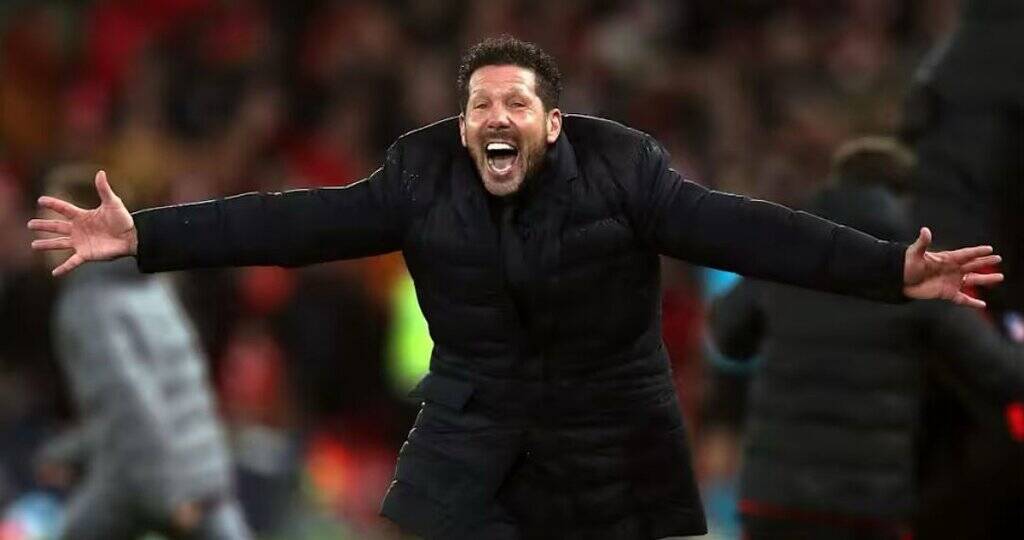
According to the 2025 ranking by Money.it, here are the ten coaches with the highest salaries (amounts in millions of euros):
| Position | Coach | Club | Annual Salary (€M) |
|---|---|---|---|
| 1 | Diego Simeone | Atlético Madrid | 34.0 |
| 2 | Pep Guardiola | Manchester City | 22.68 |
| 4 | Mikel Arteta | Arsenal | 17.0 |
| 5 | Jorge Jesus | Al‑Hilal | 11.34 |
| 7 | Luis Enrique | PSG | 10.75 |
| 9 | Unai Emery | Aston Villa | 9.0 |
| 10 | Ruben Amorim | Manchester United | 7.3 |
Additionally, in U.S. dollars: Front Office Sports reports that Diego Simeone earns $33.5 million annually, topping the global 2025 ranking.
Historic Records: Highest Past Salaries

Simeone among the highest ever
In 2018, according to Eurosport (from France Football data), Diego Simeone was historically at the top too, with total compensation – including gross salary and bonuses – of around €41 million.
Mourinho, Lippi, Guardiola in previous eras

Historically speaking: José Mourinho earned about €31 million during his time at Manchester United (2018). Marcello Lippi: €23 million as China’s national team coach. Thierry Henry: €25.5 million for a short coaching role. Pep Guardiola: approx. €24‑24.68M (2018‑2024). Sir Alex Ferguson was also among the top-paid: around €9.4M annually in 2012.
| Coach | Year/Data | Estimated Salary (€M) |
|---|---|---|
| Diego Simeone | 2018 (France Football) | ~41 |
| José Mourinho | 2018–2021 | ~26–31 |
| Marcello Lippi | 2018 (China NT) | ~23 |
| Pep Guardiola | 2025 | ~22.68 |
| Diego Simeone | 2025 | ~34 |
| Alex Ferguson | 2012 | ~9.4 |
Simeone remains a standout case, both historically (€41M in 2018) and currently (€34M in 2025), confirming his strategic value to Atlético Madrid. Pep Guardiola remains one of the highest-paid coaches, with consistent earnings above €20M. New-generation managers like Mikel Arteta are reaching high figures thanks to emerging markets (e.g., Saudi Arabia, Premier League). In the past, figures like Mourinho and Lippi set record compensations, reinforcing the trend of rising technical salaries. Differences also arise depending on the type of role: positions in national federations (like Lippi or Capello) often came with different compensation structures compared to clubs.
Coaches’ earnings reflect the enormous economic growth of football in recent decades. From record-breaking salaries like those of Simeone or Guardiola to the impressive rise of new coaches, the manager’s role has evolved beyond tactics—it has become a key economic and strategic asset.
In modern football, coaching salaries mirror an industry in constant expansion, where technical leadership goes beyond athletic preparation or tactical planning—it now includes leading entire sporting and business projects. Managers are increasingly seen as “CEOs on the pitch”, responsible not just for sporting results but also for a club’s identity and financial value.
The manager’s role is now central in club decision-making: just consider the influence that coaches like Guardiola, Klopp, or Ancelotti have over transfers, medical staff, youth development, and overall club philosophy. It’s no surprise that clubs are willing to offer multi-million euro contracts to retain such figures.
In modern football, coaches’ salaries have reached levels that would have been unthinkable just a few decades ago. The rise of television revenues, private investments, and wealthy leagues and federations has transformed managers from simple technical guides into true financial assets. Just like players and executives, coaches today can demand salaries comparable to those of top players.
Furthermore, the influx of capital from countries like Saudi Arabia, Qatar, and the U.S. has shifted the market balance even more, triggering a financial race that has granted enormous contracts even to less established names (such as Steven Gerrard or early-career Xavi). This trend appears set to continue in the near future.