By Andrea Caropreso
Index
Follow us on social media to stay updated on the latest transfer market news: Instagram, Facebook e X.
Italy is likely experiencing the darkest period in its history. The lack of medium-to-long-term planning, the absence of investment in youth development, and the underappreciation of available talent have brought the Italian football system to its knees. Now, it faces the nightmare of missing out on qualification for the 2026 World Cup.
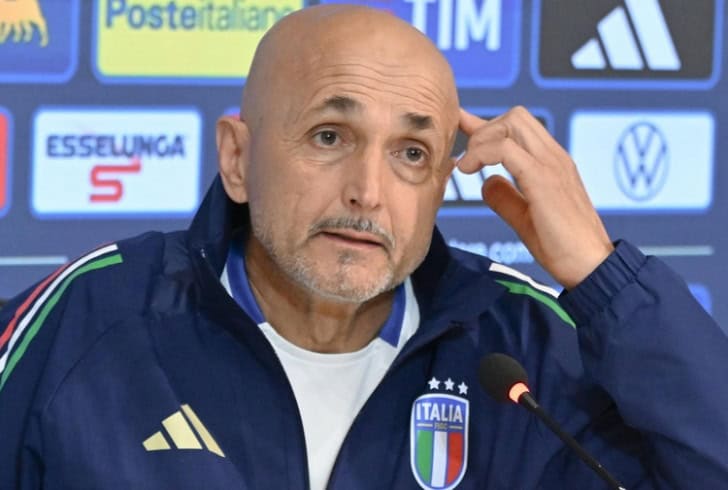
For now, as has happened in the past, the coach has paid the price: Luciano Spalletti. Although the blame is not his alone, it must be emphasized that the former Napoli coach’s tenure has been a failure, with consequences also on the financial side for the Federation.
Spalletti’s Costs
The now-former coach cost the Federation around 6 million euros gross per year—a figure that in 2023 seemed well deserved for the man who brought the Scudetto back to Napoli after 33 years. But history has shown that the Tuscan coach was unable to inspire the same connection with the national team. Exactly a year ago, Italy endured a disastrous European Championship, which also had an impact on revenue.
The costs of Club Italia alone—the organizational structure that brought the team to Germany—were accounted for at 36 million euros, with an additional 15 million euros spent on the large technical and medical staff that accompanied the players. To this must be added 10 million euros in direct expenses for the trip and the luxurious accommodation at Casa Azzurri.
Overall, the machine of the Italian Football Federation costs around 150 million euros per year. Between salaries and ancillary costs, Italian football survives thanks to sponsorships and television rights—two pillars that could collapse in the event of another failure.
The Risks of Failing to Qualify
When a national team like Italy misses a World Cup, the consequences go far beyond the field. The impact is broad and multidimensional: affecting the Federation, the entire national football sector, sponsors, and media.
The cost of failing to qualify for Italy is not limited to immediate losses such as missed FIFA bonuses, but extends to indirect consequences that hit the football industry and the global image of Italian football. A third consecutive exclusion would have an even greater impact, also from a social and symbolic perspective.
While it’s hard to precisely estimate the financial loss, data from the last two exclusions is clear: over 100 million euros lost by the entire system. A tangible economic blow that reflects a collapse in commercial opportunities, visibility, and prestige.
Every team that qualifies for the World Cup final phase receives an entry bonus. In 2022 in Qatar, this was about 2.5 million dollars just for participating. The real value came from advancing in the tournament. Reaching the knockout stages meant about 8 million more. With each stage, revenues could rise significantly—potentially generating tens of millions for the national Federations. And that doesn’t even factor in merchandising losses. Who today wants to buy an Italy jersey? Who are the fans’ heroes?
The Impact on Italian Football
Beyond the financial hit, there’s a cultural and psychological toll. In a country where football is a core part of national identity, missing the World Cup is not just a sports failure—it is the failure of a generation (or now, two), who have never seen Italy shine on football’s biggest stage. Today’s teenagers—aside from Euro 2021—have only known disappointment. Millennials may remember Italy in South Africa and Brazil, but certainly not for triumphant campaigns.
Italian football simply cannot afford another blow like this. Yet, the conditions to avoid disaster are far from ideal. The Federation is still searching for a successor, passion for the national jersey seems to have faded (see the Acerbi case), and too often all problems are expected to be solved by whoever sits on the bench. If time is a great healer, let’s hope it’s also merciful—and that a possible playoff doesn’t awaken the ghosts of Sweden and North Macedonia.
By Andrea Caropreso