By Marta Elena Casanova
Follow us on social networks to stay updated on the latest transfer market news: Instagram, Facebook e X.
Index
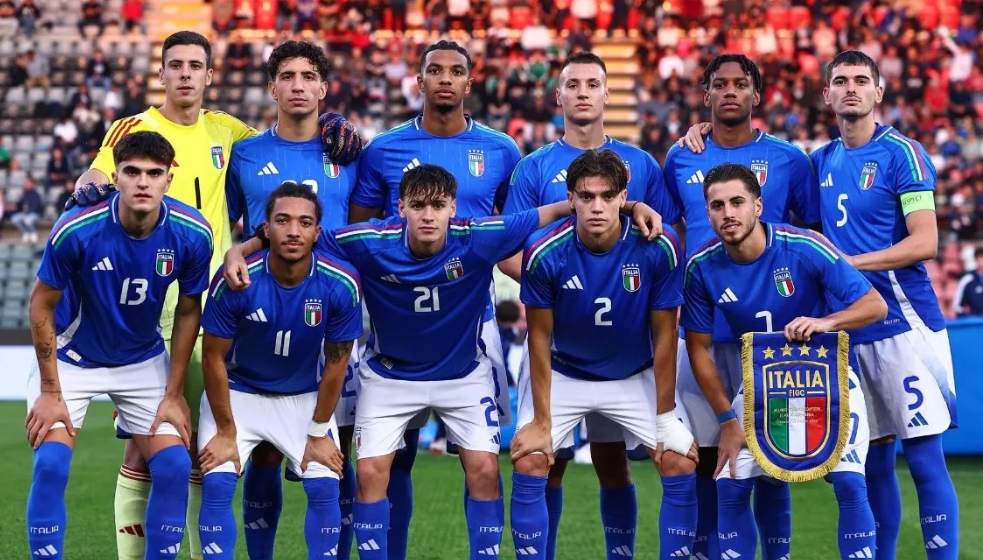
In the grand stage of football, youth national teams — from Under-17 to Under-20 and Under-21 — live in a kind of media limbo. Few fans follow them, they rarely appear in prime-time broadcasts, and only when extraordinary results occur do they draw attention. Yet it is precisely in those tournaments, far from the spotlight, that lie the economic and sporting roots of the future game: tomorrow’s champions and future profit opportunities for clubs and federations.
Rising young talents
Youth national teams are the first step toward football’s elite.
This is where major European clubs scout the next big thing — the young talent to develop and sell for millions.
However, in Italy, attention to these categories is lower than it should be.
An Under-17 Euro or Under-20 World Cup barely gets a fraction of the audience that follows the senior national team or Serie A. But for scouts and investors, these tournaments are true gold mines.
Many current Serie A stars came through those teams: Chiesa, Tonali, Donnarumma, Barella, Scalvini, Ricci and Casadei all wore the “Under” blue before reaching the top level. For the FIGC, this path holds not only technical but also financial value.
The economic logic behind youth teams
Each player who stands out in a youth tournament represents a potential financial return for the football system.
When an Italian club develops a homegrown player, it gains both technically and economically.
According to the CIES 2025 report, Italian-trained players aged 17–21 have a combined market value exceeding €1.2 billion in Europe.
The federation also benefits: every player raised within the Azzurri youth system strengthens the national brand, increases the value of UEFA and FIFA youth TV rights, and attracts sponsors eager to associate with the future of Italian football.
It’s an ecosystem that produces long-term value, even if not immediately visible.
The Under-21 as a springboard
Among all youth categories, the Under-21 team remains the most strategic.
It’s the last step before the senior team and often serves as a tactical laboratory.
Coaches like Paolo Nicolato, Nunziata and now Carmine Baldini have embraced a technical, attacking approach to develop confidence and character in young players.
Recent results prove it: four straight wins in the 2027 Euro qualifiers (including a 4–0 win over Sweden and a 5–1 against Armenia) have revived enthusiasm.
Key figures: Francesco Camarda, only 17, already prolific with Italy’s shirt, and Simone Pafundi, Sampdoria forward and the team’s creative leader.
Their progress is both a sporting and an economic signal — every breakthrough boosts not only their value but that of the entire system that produced them.
Under-17 and Under-20: where real scouting begins
If the Under-21 shows the results, the Under-17 and Under-20 are where talent is sown.
Scouts work silently here, watching dozens of matches to spot potential early.
Italian clubs still lag behind European powers like England, which has heavily invested in academies over the past decade, turning youth tournaments into real marketplaces.
Still, positive examples exist: Atalanta, Empoli, and Sassuolo have developed technical models that enhance internal talent and create strong financial returns.
For such clubs, following the youth national teams means anticipating the big players’ moves — discovering prospects before the media does. It’s a competitive advantage worth millions.
Why more attention is needed
The real issue is media visibility.
In a digital era dominated by social media and highlights, youth matches should be more accessible and better promoted.
The FIGC and Lega Serie A have begun streaming Under-18 and Under-19 tournaments, but the next step is storytelling: commentary, analysis, narratives.
Behind every winning Under-17 Italy side lies more than a trophy — it’s the blueprint of the nation’s football future.
An investment in the system’s future
Seeing youth teams merely as training grounds is shortsighted.
They are a strategic investment: every euro spent today on scouting, staff, and infrastructure can translate tomorrow into tens of millions in player sales and federation revenues.
Italy has everything it takes to reclaim its role in youth football — technical tradition, tactical expertise, and promising generations — but it needs continuity, vision, and above all, belief that tomorrow’s football begins today.
By Marta Elena Casanova