By Marta Elena Casanova
Follow us on social networks to stay updated on the latest transfer market news: Instagram, Facebook e X.
Index
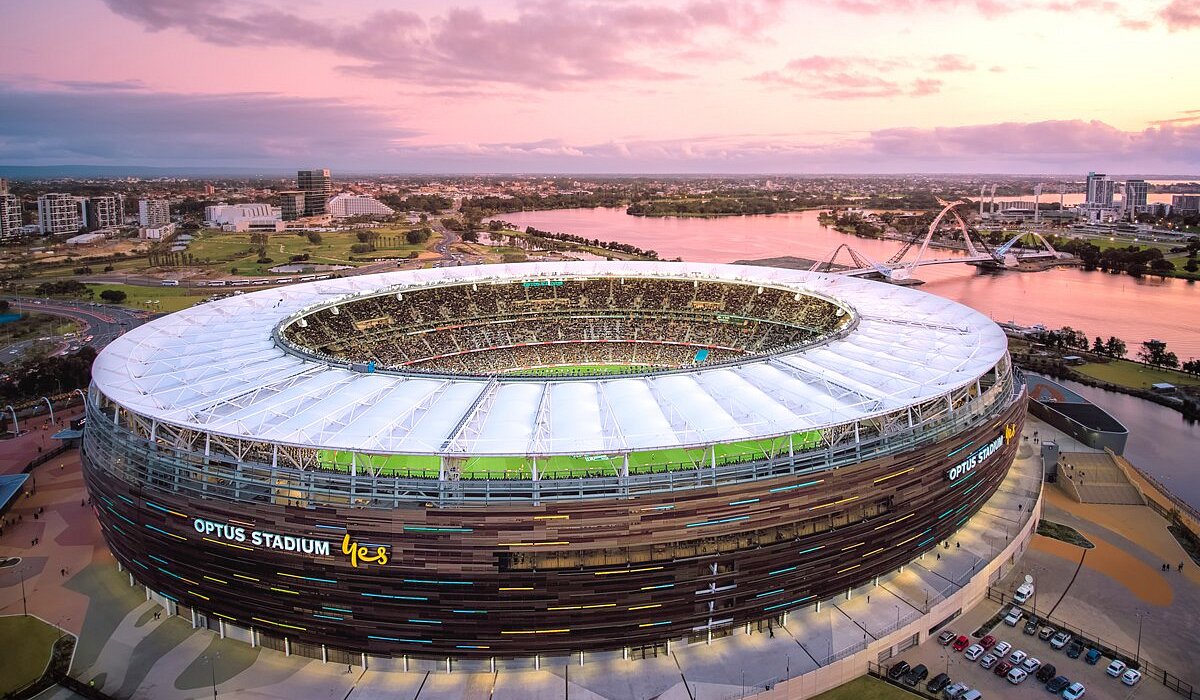
It’s official: Milan vs Como will be played in Australia, in Perth, in February 2026. A decision without precedent for Serie A, reluctantly approved by UEFA, which nevertheless made one thing clear from the start: this must not become a rule.
UEFA president Aleksander Čeferin confirmed that it is a “purely exceptional” case, caused by the Milan-Cortina 2026 Winter Olympics, which will occupy San Siro during that period. In other words, this is not a marketing experiment but a logistical necessity.
Even so, despite all the understandable reasons, this choice raises huge questions. Because if a Serie A match can be moved thousands of kilometres away from its fans, what remains of the concept of a ‘national championship’?

UEFA says yes — but reluctantly
UEFA also approved the overseas fixture between Barcelona and Villarreal in the United States, confirming a trend that worries many traditionalists. However, in its official statement, UEFA underlined that these permissions are “granted only on an extraordinary basis” and that the European body “has no intention of setting a precedent.”
Čeferin was clear: “League matches must be played in their own country. This decision is exceptional and cannot be considered a model for the future.”
Strong words, but also a warning. Because, as modern football has shown, every exception risks becoming a convenient precedent for those eager to go further.

The danger of a football without roots
Playing Milan-Como in Australia might seem like a great international showcase: the allure of the Milan brand, the global appeal of Serie A, the pull of sponsors. All true. But football is not just an exportable product — it is also place, identity, and belonging.
Every league match represents a bond between club and fans, between city and history. Moving it 14,000 kilometres away means cutting that bond. It means telling Como’s supporters — who might dream of seeing their team play in a major stadium like San Siro — that they will have to watch it on TV, time zone permitting.
There is a principle that must be strongly defended: national football must remain rooted in its own country. Not out of nostalgia, but out of sporting, cultural, and competitive coherence.
Fairness and respect for competition
There is also a technical issue, less romantic but equally serious: the integrity of the competition.
A match played in Perth means 20 hours of travel, jet lag, different weather, huge costs, and physical strain. Is it still “the same game” that would have been played in Milan?
Serie A is already a complex and uneven tournament; adding logistical imbalances, even for image reasons, risks altering the competitive fairness between clubs.
UEFA itself wanted to stress this point: domestic matches make sense only if the conditions are equivalent for everyone. Otherwise, the calendar becomes a patchwork of exceptions and economic interests, with sport taking a back seat.
A justified exception — but not to be repeated
No one doubts that in this case there is a valid reason: the Olympics make San Siro unavailable. But from here to considering it acceptable to regularly move matches abroad for business reasons is a short step.
Football can live with exceptions, but it must stay true to its principles: playing at home means playing in your own country, in front of your own fans.
Milan-Como in Australia may be a curious, even spectacular event, but it must not become a model.
The day Italian football starts chasing global audiences at the expense of its local roots, we will have lost not only the geography of the game — but its soul.
By Marta Elena Casanova