By Marta Elena Casanova
Follow us on social networks to stay updated on the latest transfer market news: Instagram, Facebook e X.
Index
In recent years, Italy has been at the center of a heated debate about the modernization of its football infrastructure.
UEFA President Aleksander Čeferin recently voiced strong criticism of Italian stadiums, calling them “terrible” and the worst among major European leagues.
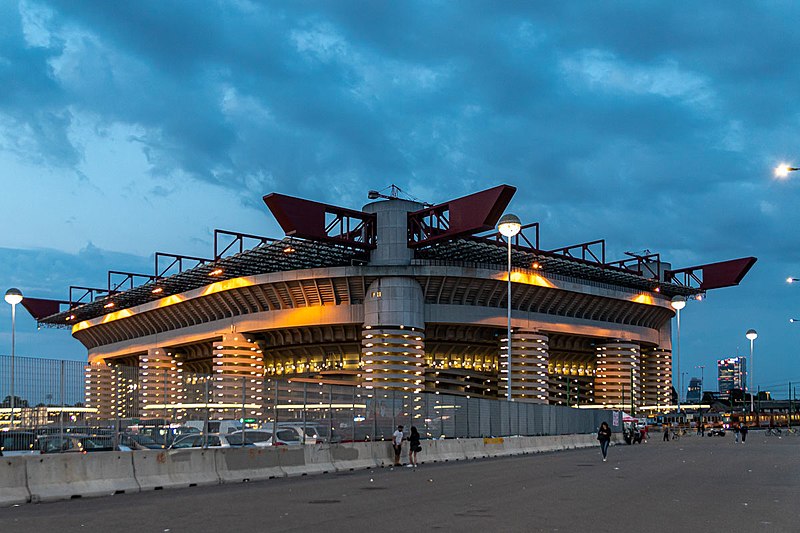
In an interview with SportMediaset, Čeferin emphasized the lack of concrete progress, citing the rejection of San Siro’s bid in Milan to host a Champions League final and the ongoing discussions about building a new stadium in the city.
These comments highlight the urgent need for infrastructure renewal, especially in view of Euro 2032, which Italy will co-host with Turkey.
Čeferin pointed out that there is currently no stadium in Italy suitable for hosting a Champions League final, stressing the need for strong guarantees from the government and municipalities to build modern, functional facilities.
Italy’s Infrastructure Gap
According to a study presented to CONI, the average age of Italian stadiums is 68 years, compared to 38 in Germany and 35 in England.
Only 24% of Serie A and B stadiums are owned by clubs, compared to over 80% in major European leagues.
This situation negatively affects the fan experience and the profitability of the venues, which are often used only for matches and not as year-round multifunctional centers.
European Stadiums: Models to Follow
To close the gap, Italy can look to successful examples across Europe:
- Tottenham Hotspur Stadium in London: Opened in 2019, it cost over €1 billion and holds 61,000 spectators. Equipped with cutting-edge technology, it features heated seats, a glass tunnel to view the players, and a rooftop walk.
- Allianz Arena in Munich: Built for the 2006 World Cup, it holds 75,000 spectators and cost €340 million. It stands out for its multifunctionality and innovative design.
- Stade de France in Paris: Inaugurated in 1998, with 81,338 seats, it hosts both sports events and concerts, showing the value of versatile stadiums.
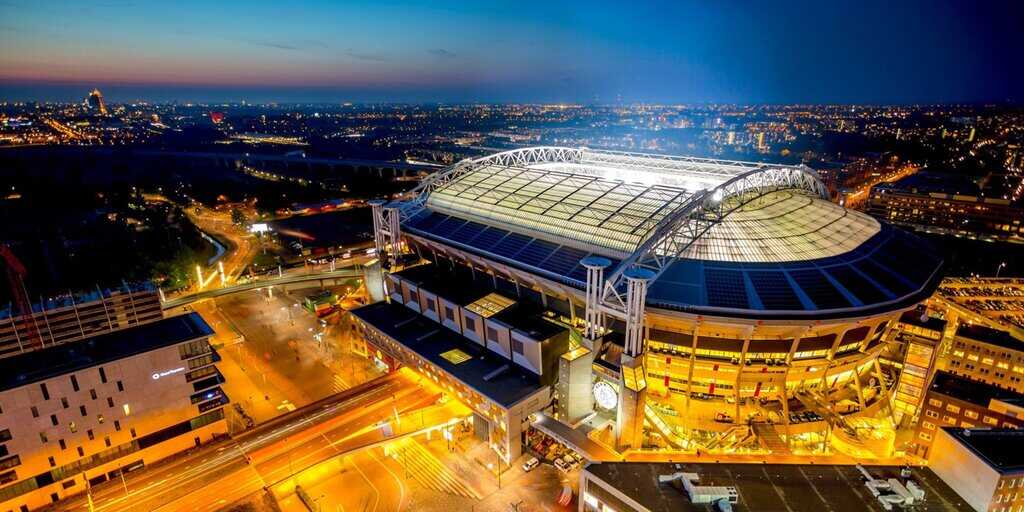
- Johan Cruijff Arena in Amsterdam: Opened in 1996 with a €140 million investment and 55,748 capacity, it’s a model of sustainability and urban integration, hosting around 70 events per year, only 35% of which are football-related.
A Positive Example: Allianz Stadium
The Allianz Stadium in Turin, opened in 2011, is a rare positive case in the Italian landscape.
With 41,507 seats, it was built using environmentally sustainable criteria, including recycled materials and renewable energy systems.
It is also the first Italian stadium to receive ISO 14001 environmental certification.
Toward Euro 2032: A Challenge and an Opportunity
Hosting Euro 2032 is a unique opportunity for Italy to modernize its football infrastructure.
It is essential for the government, local authorities, and clubs to work together to build modern, sustainable, multifunctional stadiums capable of hosting international events and offering a high-level fan experience.
Only through concrete and coordinated efforts will Italy be able to close the gap with other European nations and restore its football to the central role it deserves.
By Marta Elena Casanova