By Marta Elena Casanova
Follow us on social networks to stay updated on the latest transfer market news: Instagram, Facebook e X.
Index
Sustainable stadium
Sustainable stadiums. Where the key word is precisely sustainable. In modern European football, a stadium is much more than a playing field: it is an economic asset, an identity symbol, and increasingly the foundation for a club’s survival. While some clubs can afford billion-dollar renovations — from Real Madrid with the new Bernabéu to Bayern Munich with the Allianz Arena — in recent years it has been the medium and smaller clubs that have surprised. Clubs without global fanbases or unlimited funds, yet with the courage and vision to build modern facilities: sustainable stadiums that reduce environmental impact without sinking into debt.
The difference lies not only in the numbers but in the philosophy: not building pharaonic cathedrals destined to burden finances, but sustainable stadiums powered by renewable energy, designed to function, to grow with the community, and to generate long-term stability. In this context, two European projects stand out: Freiburg and Brentford.
Freiburg: the German path to sustainability
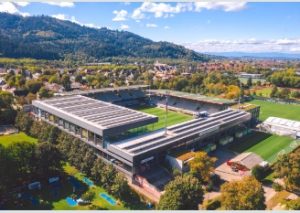
Freiburg has long been regarded as a model club in Germany, not least because of its sustainable stadium. A club that, despite operating with one of the smallest budgets in the Bundesliga, remains competitive thanks to forward-thinking choices. The construction of the Europa-Park Stadion, inaugurated in 2021, was the decisive step in this strategy.
With a capacity of just under 35,000 seats and a total cost of around €80 million, the stadium is not an architectural giant but a model of functionality. Funding came from a balanced mix of long-term loans, public contributions tied to urban development, and the club’s own resources. No excessive exposure, no unmanageable debt.
From the outset, the project was designed with sustainability in mind: solar panels on the roof, energy efficiency, enhanced public transport links to reduce car use. This made the stadium not just a football venue, but a reference point for the city.
The financial results arrived quickly. Matchday revenue increased by around 30% compared to the old Dreisamstadion. But the most interesting result came on the pitch: with its new sustainable home, Freiburg gained the solidity to establish itself as a regular European contender, proving that a well-designed infrastructure can change a club’s destiny.
Brentford: the neighborhood that beats the Premier
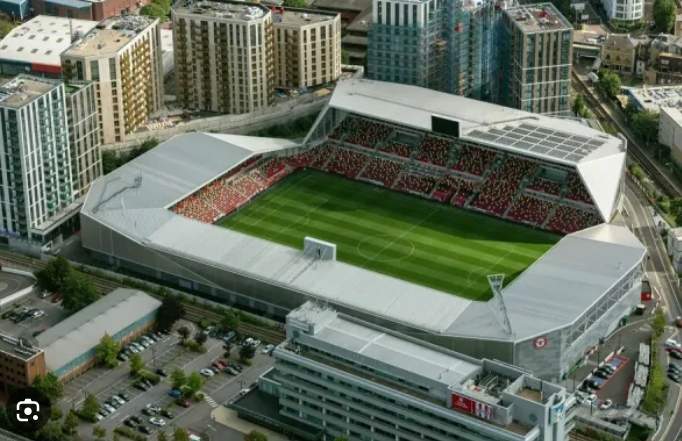
In London, in a completely different context, the lesson is similar. Brentford left the historic Griffin Park in 2020 — romantic but outdated — to move into the more sustainable Community Stadium. With 17,250 seats and a cost of around £70 million, the sustainable stadium is a masterpiece of financial efficiency.
The strategy was clear: no unmanageable debts, but realistic repayment plans and private investors’ support. Not a gamble, but a sustainable investment, tailored to the club’s real possibilities.
The Community Stadium is not just a football ground. It was designed as a multifunctional hub, capable of hosting events and commercial activities. This versatility has made the stadium an economic engine that goes far beyond the 19 Premier League home games.
The numbers tell the story: today, stadium revenues exceed £12 million annually, an unimaginable figure in the Griffin Park days. But the real difference is seen on the pitch: Brentford, once used to the lower leagues, has become a stable Premier League presence, with a solid base to plan the future confidently.
The sustainable stadium as a social elevator
The stories of Freiburg and Brentford share a common thread: the stadium — or rather the sustainable stadium — as a social elevator. For medium and small clubs, it represents the chance to partially close the gap with the giants.
Owning a sustainable stadium means direct income from tickets and season passes, but also more attractive sponsorship deals through naming rights, commercial spaces, corporate hospitality for local businesses, and non-football events. It’s a way to strengthen ties with the community, turning the club into a central player in the city’s life.
And there is an even more important point: while TV rights are subject to cycles and increasingly complex negotiations, the sustainable stadium remains a tangible, strategic asset. A guarantee of stability that allows clubs to face the future with greater confidence.
The billion-dollar football world may belong to the superpowers, but medium and small clubs have found their own path: sustainable stadiums, debt-free. Not pharaonic cathedrals, but facilities designed for the real needs of a community and a budget.
Freiburg and Brentford are the symbols of this silent revolution: two clubs that, thanks to a sustainable stadium, have gone from outsiders to stable protagonists. Their journey shows that the real ticket to remain competitive in Europe is not a 30-goal striker, but a well-built home.
By Marta Elena Casanova