By Marta Elena Casanova
Follow us on social networks to stay updated on the latest transfer market news: Instagram, Facebook e X.
Index
With the start of a new football season, Italian fans are preparing to follow both men’s and women’s leagues full of challenges. But beyond goals and on-field strategies, the situation at the managerial and technical levels changes relatively little. While women’s football is growing, albeit with ups and downs, women in decision-making roles remain exceptions.
Carolina Morace: a pioneer who challenged the system
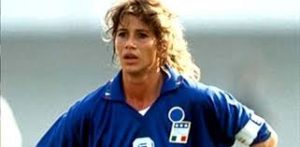
The first name that stands out in this context is Carolina Morace, a historic pioneer of Italian women’s football. Not only an iconic player but also a coach capable of breaking barriers, Morace was among the first to lead professional men’s teams, collaborating with president Luciano Gaucci at Viterbese. Her journey illustrates the difficulty of establishing oneself in an environment where gender is often considered more important than merit. Morace personally experienced the cultural resistance of clubs and executives, yet she became a role model for future generations. Her work today serves as a reference not only for female players but also for those aspiring to technical roles in men’s football.
Patrizia Panico: between field and bench
Alongside Morace, another key name is Patrizia Panico, former striker of the national women’s team and now a coach. Panico has played a crucial role in developing young Italian players and has also coached male youth teams, demonstrating that skills and leadership have no gender. Her career symbolizes an Italy that is slowly opening up but still struggles to provide continuity and opportunities for women in key roles. Panico represents the transition between on-field experience and managerial ability, essential for truly changing the administrative landscape of football.
Magda Pozzo and sustainable innovation at Udinese
A concrete and current example of a woman at the top of Italian football comes from Udinese: Magda Pozzo. Daughter of owner Giampaolo Pozzo, Magda serves as Strategic Marketing Director and manages key aspects such as the stadium, commercial partnerships, and events. Her work goes beyond ordinary management: she has introduced innovative projects focused on sustainability and environmental responsibility. In recent years, Udinese has launched initiatives to make the stadium greener: reducing energy consumption, managing waste efficiently, and enhancing shared spaces for fans. Magda Pozzo has been at the center of these projects, aiming to make the stadium a model of sustainability and innovation in Italian football. Her presence shows that women can not only hold strategic roles but also lead significant cultural and economic change within clubs.
The overall picture: a significant minority
Despite progress and reference figures, the reality remains: women in managerial and technical roles in Italian football are still rare. Even in women’s Serie A, they rarely occupy central decision-making positions. This imbalance is not only cultural but also economic. Several UEFA studies show that diversity on boards brings tangible benefits: broader vision, more flexible decision-making, and better economic results. Ignoring women’s presence limits innovation potential, relegating half of the population to a marginal role even in a growing sector like women’s football.
Signs of change
There are encouraging signs. The FIGC has launched training courses dedicated to female executives and coaches, aiming to create qualified professionals ready to lead clubs in the coming years. Some clubs, like Udinese with Magda Pozzo, have shown that women in key positions can lead innovative projects, both in management and environmental initiatives. However, the path remains long. The real challenge is to create an ecosystem where female figures are not isolated cases but recognized, normal elements within club administrative structures. Only then can Italian football compete not just on the field but also in modern and inclusive club management.
Conclusion: the gender equality match
The football season opens with new challenges and high expectations, but off the pitch, the toughest match is still gender equality. Carolina Morace paved the way, Patrizia Panico continues it, and Magda Pozzo enriches it with innovation and sustainability. Giving women space means innovating, making the movement more competitive, and valuing football in every aspect. Today, the most important match is played behind the scenes: winning it means ensuring a more modern, inclusive, and sustainable future for all Italian football.
By Marta Elena Casanova