By Marta Elena Casanova
Follow us on social networks to stay updated on the latest transfer market news: Instagram, Facebook e X.
Index
The year 2025 has confirmed an already evident trend: Italian women’s tennis is living a golden era, while women’s football is growing more slowly, between achievements in terms of rights and ongoing financial difficulties. On the pitch, both sports have delivered emotions — from Italy’s second consecutive Billie Jean King Cup title (2024 and 2025) to the progress of women’s Serie A after the recognition of professionalism — but in terms of earnings, the gap remains huge.

Women’s tennis: millionaire prizes for those who reach the top
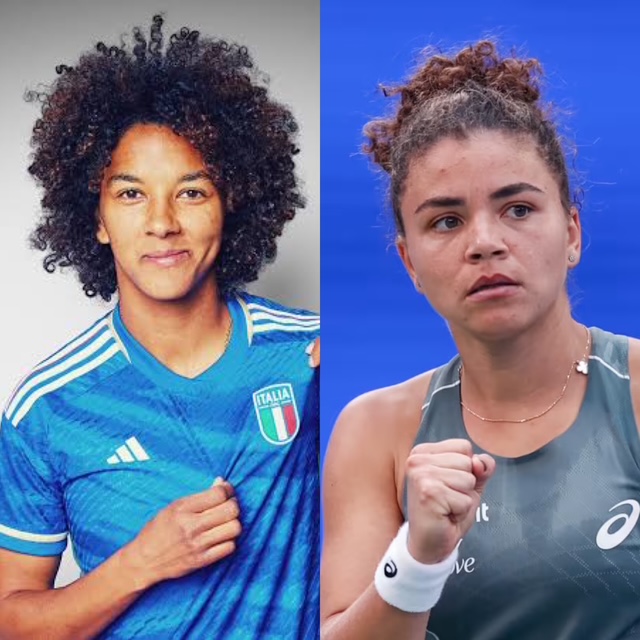
Tennis is a sport that rewards the individual. Every result, from the ITF circuit to a Grand Slam, generates immediate prize money that goes directly to the athlete. In women’s tennis, a player like Jasmine Paolini, who broke through in 2024 with a Roland Garros final and a Dubai title, earned more than $3 million in prize money in a single season.
Even less successful players, such as Camila Giorgi (now retired), closed their careers with more than €6 million in prize money, not including personal sponsorships and advertising contracts. Behind Paolini, a new generation has emerged: Elisabetta Cocciaretto and Lucia Bronzetti have established themselves firmly in the WTA top 50, with strong potential both technically and financially.
Of course, tennis is expensive: travel, coaches, and trainers require high costs. But the earning potential remains enormous for those who consistently stay in the world’s top 100.
Women’s football: low salaries despite professionalism
The introduction of professionalism in 2022 represented a historic turning point for women’s football in Italy. Today, players have regular contracts and social protections, but the figures remain modest.
The minimum guaranteed salary for a Serie A player is about €26,000 gross per year (just under €20,000 net). Younger players, between 19 and 23, start at around €20,000 gross. On average, a female footballer in Italy earns €15,000–18,000 gross annually, just over €1,000 a month.
Top players, such as Cristiana Girelli (Juventus) and Valentina Giacinti (Galatasaray), reach figures close to €200,000–225,000 gross: significant within the Italian context, but still far away from tennis earnings and, above all, from men’s salaries.

The comparison
The disproportion between women’s football and women’s tennis is clear: a mid-level tennis player can earn in a single season what a footballer might accumulate in ten years of her career. In tennis, prize money grows progressively with results, while in football revenues depend on club budgets and a TV system that still generates limited income.
Paradoxically, the best Italian female footballers earn less than many tennis players ranked outside the WTA top 50.
Sponsorships: the weight of individuality
The gap widens when it comes to marketing. Tennis players have strong individual identities and become recognizable faces for clothing brands, rackets, accessories, and even fashion or cosmetic campaigns. A Grand Slam final or a WTA 1000 title can turn a player into a global star.
Female footballers, on the other hand, struggle to stand out as independent ambassadors. In Italy, only a few, such as Sara Gama or Barbara Bonansea, have managed to associate their image with major brands. For most, visibility remains linked to the club.
The gap with men
A male Serie A player earns on average over €1.5 million per year, while top players easily exceed €10 million. In tennis, Jannik Sinner closed 2024 with more than $15 million in prize money, not including multimillion-dollar sponsorships and bonuses.
The comparison with women’s sport is stark. A Serie A female footballer earns on average between €15,000 and €20,000 gross per year. A top player like Paolini, even at the top of world tennis, earned just over $3 million in one season, while a tennis player outside the top 50 often struggles to cover basic career costs. The gap between Sinner and Paolini is five to one in terms of prize money and becomes even wider when sponsorship deals are considered.
It is not only a matter of figures: TV broadcasters, sponsors, and audiences continue to invest far less in women’s sports.
Bridging these disparities is difficult but not impossible. Greater investments in TV rights for women’s Serie A are needed, as well as stronger promotion of athletes as ambassadors, consistent international results to spark public interest, and growth in the fan and player base, which remains the key to attracting sponsors.
Today, Italian women’s tennis is synonymous with success and important earnings for those who reach the top. Women’s football, despite historic steps such as professionalism, still lags behind: the majority of players barely earn enough to live from sport.
The gap with men — in both tennis and football — remains huge, but the direction is clear: to transform sporting success into economic opportunity. Because the emotions of a Paolini victory or a Girelli goal are priceless and deserve to be valued at the same level.
By Marta Elena Casanova