By Marta Elena Casanova
Follow us on social networks to stay updated on the latest transfer market news: Instagram, Facebook e X.
Index
In 2025, sport is no longer played only on the field — victories are also measured in likes, followers, and views. Social media has become a crucial tool for building an athlete’s career, attracting sponsors, and strengthening their personal brand. When it comes to women’s sports, the comparison between tennis players and footballers is fascinating: who really dominates online?
Italian tennis stars: Paolini on the rise, Giorgi remains a social icon
Italian women’s tennis is living a golden moment, and it shows on social media.
• Camila Giorgi remains the most-followed athlete, with over 700,000 Instagram followers. Her profile, strongly tied to fashion and lifestyle, has helped her stay relevant even during quieter sporting periods.
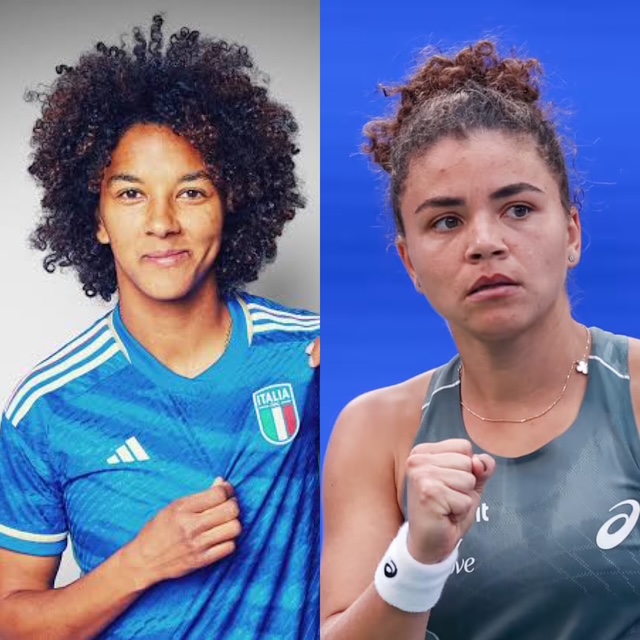
• Jasmine Paolini, who broke through in 2024 with a Roland Garros final and a Dubai title, is also growing digitally: her follower count is approaching Giorgi’s, boosted by her positive image and strong results.
• Martina Trevisan has a smaller but loyal community (around 70,000 followers) who follow her for her authenticity and story of resilience.
In tennis, social media is not just about results — it’s also about travel, behind-the-scenes moments, and collaborations with brands, which makes it a powerful platform for sponsorships and storytelling.
Italian footballers: the strength of the Azzurre leaders
In Italian women’s football, the numbers are smaller, but national team stars are gaining traction.
• Sara Gama, long-time captain of Juventus and the Azzurre, has about 160,000 Instagram followers and uses her profile to promote social and inclusion issues as much as football.
• Cristiana Girelli, Juventus striker and national team icon, has around 260,000 followers, sharing club updates and sporting achievements.
• Barbara Bonansea reaches roughly 700,000 followers, balancing posts about football, lifestyle, and commercial partnerships.
These figures remain lower than those of tennis players, but they signal steady growth. The Italian Serie A Femminile may not yet have the WTA’s global visibility, but it’s earning media space, and its stars are learning to leverage it digitally.

Global stars: Coco Gauff vs Alex Morgan
The picture becomes even more intriguing internationally.
In tennis:
• Coco Gauff, 2023 US Open champion, has surpassed 2 million followers, emerging as a global face of the new generation.
• Emma Raducanu, 2021 US Open winner, has 3 million followers despite inconsistent results — proving that image can sometimes outweigh trophies.
In football:
• Alex Morgan, icon of the U.S. national team, is one of the world’s most-followed athletes, with around 10 million Instagram followers — far more than most top tennis players.
• Alexia Putellas, two-time Ballon d’Or winner, has over 3.2 million followers and has become a global ambassador not only for Barcelona but also for brands like Nike.
These figures reveal a clear trend: while tennis leads in Italy, women’s football dominates globally, with its top players reaching celebrity-level recognition.

Social media and marketing: the power of community
For athletes today, social presence is about more than follower counts:
• Monetization – Instagram and TikTok serve as business tools for paid collaborations and sponsorships.
• Engagement – A tennis player speaks to an international audience, while a footballer’s audience is often more domestic and club-oriented.
• Personal storytelling – Narratives of resilience (Trevisan), leadership (Gama), or lifestyle (Giorgi) create distinct personal brands that attract sponsors.
Social media, therefore, isn’t just a showcase — it’s an economic lever. The stronger the following, the greater the earning potential off the field.
Comparing with the men: still a huge gap
The gap with male athletes remains enormous. Cristiano Ronaldo has over 630 million Instagram followers, Lionel Messi around 500 million. In tennis, Jannik Sinner has passed 4 million, while Carlos Alcaraz is near 7 million.
Women are far behind: even the most-followed, like Alex Morgan, are nowhere near those figures. But the trend is positive — female athletes’ audiences are growing fast, and public perception is shifting.
In Italy, tennis players like Giorgi, Paolini, and Trevisan lead in digital visibility, successfully positioning themselves as personal brands. In football, players remain tied to team contexts, but their online influence is steadily increasing.
Globally, however, the story flips: stars like Alex Morgan and Alexia Putellas have propelled women’s football to new heights, proving that women’s sport can be a powerful vehicle for global communication and branding.
The future of women’s sport will depend on this ability — to turn athletic success into visibility, community, and economic opportunity.
By Marta Elena Casanova