By Marta Elena Casanova
Follow us on social networks to stay updated on the latest transfer market news: Instagram, Facebook e X.
Index
The year 2025 confirms a truth that has been evident for some time: in the Italian and European sports landscape, women’s tennis manages to attract sponsors and advertising contracts with an ease that women’s football still struggles to match. It is not only about sporting results, but also about an economic and communication model that makes tennis players more appealing on the market.
Women’s tennis: the athlete as a brand
In tennis, image counts almost as much as results. Every player is first and foremost a personal brand: she wears designer clothes, uses rackets from global brands, and becomes the face of campaigns that often go beyond sport.
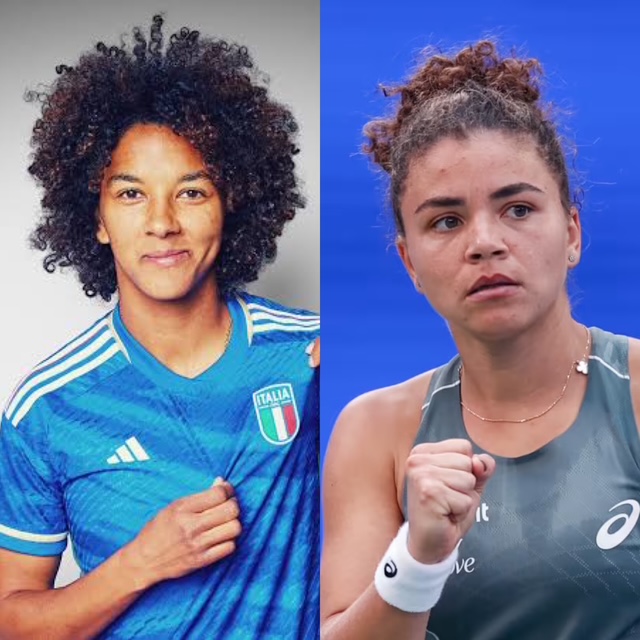
The clearest example today is Jasmine Paolini. Her international breakthrough, with a Roland Garros final and a Masters 1000 title in Dubai, opened doors not only in the WTA circuit but also in marketing. Paolini has become the face of national campaigns and is starting to represent a model for the Italian women’s movement: talent, determination, and a positive image.
Alongside her is Martina Trevisan, a Roland Garros 2022 semifinalist. Even without constant results, she gained attention thanks to a story of resilience and strong character, which appeals to brands sensitive to themes of inclusion and wellbeing.
This mechanism goes far beyond Italy. Abroad, players like Coco Gauff in the United States or Emma Raducanu in Britain have signed multi-million contracts with Nike, Rolex, and Dior. Tennis thus offers fertile ground: the tennis player is a recognizable star, independent of a team context, and her name is immediately usable by a brand.

Women’s football: collective visibility, limited individuality
In women’s football, the dynamics are very different. A player is part of a collective, and often the club’s image outweighs the individual one. While this guarantees a sense of belonging and sporting identity, it also limits the possibility of standing out as an independent ambassador.
In Italy, there are some exceptions: Sara Gama has been a Nike ambassador and the face of inclusion campaigns; Barbara Bonansea has worked with sports and institutional brands; Cristiana Girelli has appeared in national advertising thanks to the visibility gained with Juventus and the national team. However, these are isolated cases, not a consolidated system.
Abroad, the situation is more advanced: in the United States, Alex Morgan has long been a global icon with multi-million deals; in Spain, Alexia Putellas, a two-time Ballon d’Or winner, is linked to top international brands. But again, we are talking about absolute stars in more mature contexts compared to Italy.

Sponsorships: figures and differences
The gap between tennis and women’s football is clear in the numbers. A top-level tennis player can sign contracts worth 2–3 million euros per year in sponsorships alone. Globally, champions like Naomi Osaka or Serena Williams have easily surpassed 50 million annually, combining prize money and advertising deals.
For footballers, however, the figures are much lower: the luckiest reach a few hundred thousand euros, but the majority settle for smaller deals, often linked to local sponsors or club partners. In Italy, the milestone of €1 million per year in individual sponsorships is still very far away.
Why does tennis attract more sponsors?
There are many reasons: a tennis player competing in WTA tournaments is followed by millions of viewers worldwide. An Italian footballer, however, is mainly visible within the national context. In tennis, the protagonist is always the athlete: her name and face are instantly recognizable. In football, the focus is shared, and the club remains dominant.
The commercial target also matters. Tennis has historically been associated with a “higher” audience, which pushes premium brands to invest. Women’s football still needs to consolidate this appeal.
The comparison with men’s sport
Naturally, even in men’s tennis and football, sponsorship figures are on a different scale. Jannik Sinner, for example, has deals with Gucci and Rolex that guarantee him more than €20 million a year in marketing alone. In football, superstars like Cristiano Ronaldo or Lionel Messi have turned their image into true economic empires.
Women athletes remain far behind, not due to a lack of talent, but because the market still invests too little in women’s sports. Even a star like Alexia Putellas earns less in sponsorships than an average male Serie A player.
The future must bring change. Women’s Serie A is growing professionally, sports institutions are promoting targeted campaigns, and the success of Italian tennis players is helping draw public attention. But to reduce the gap, greater TV exposure, dedicated marketing campaigns that highlight players as individuals, and extra-sport collaborations in fashion, beauty, and lifestyle will be needed to turn them into popular icons.
Women’s tennis, in Italy and abroad, has already found the formula to attract sponsors: the tennis player as an independent ambassador, with international visibility and a recognizable image. Women’s football, on the other hand, is still searching for a model that values individual stars.
The gap remains wide, but the foundations to close it are there. If Italian footballers manage to combine sporting results, social media, and more personal communication, they could follow the path already traced by tennis players. Because talent, on the field as in marketing, has no gender: it only needs the right visibility.
By Marta Elena Casanova