By Marta Elena Casanova
Follow us on social networks to stay updated on the latest transfer market news: Instagram, Facebook e X.
Index
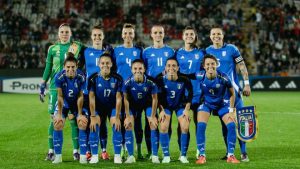
Italy has withdrawn its bid to host the Women’s Euro 2029. UEFA confirmed the decision along with the final list of submitted dossiers: Denmark+Sweden (joint bid), Germany, Poland, and Portugal remain in contention. The host will be announced on December 3, 2025. For the FIGC, which had shown interest in the initial phase, it is a heavy setback for the women’s game.

Reasons for the withdrawal: timing, stadiums, and international support
The key issue is the stadiums. In Italy, many venues require major renovations to meet UEFA standards on capacity, services, hospitality, accessibility, and safety. National media openly described them as “decisive stadiums” in determining the FIGC’s decision to step back before the final dossier deadline.
There is also the matter of political and sporting support across Europe. According to several reports, signals from Nyon suggested little backing for Italy’s bid, given the structural difficulties already highlighted in the past regarding stadium infrastructure. Facing the prospect of very few votes within the UEFA Executive Committee, Italy’s chances looked unrealistic.
Finally, timing. Delivering a competitive project for a tournament that draws fans, sponsors, and broadcasters requires a defined infrastructure plan (stadiums, training centers, transport, fan zones) and public guarantees. Unlike its rivals, Italy was unable to align all the necessary elements by UEFA’s deadline for final dossier submission.
Why Italy lags behind: the stadium gap and European comparison
The withdrawal reflects a longstanding gap. While Germany, Portugal, and the Nordic countries have invested in modern, multifunctional arenas, Italy’s stadium renewal has been patchy, often slowed by urban planning constraints, lengthy approval processes, and uncertain financing models. The same infrastructural delay was cited by sports media in the wake of the decision. Competing to host a women’s continental tournament — now a central part of UEFA’s calendar — requires standards that many Italian venues do not consistently meet.
The paradox is clear: Italy will co-host the men’s Euro 2032 with Turkey but could not sustain its bid for the Women’s Euro 2029. This does not mean there is no interest in the women’s game, but it does highlight how stadium infrastructure remains a competitive brake when it comes to short- and medium-term bids.
The missed opportunity: what Italy could have gained
Hosting the Women’s Euro would have accelerated progress on several fronts: targeted stadium upgrades, investment in training facilities, and commercial growth through sponsors and broadcasters eager to engage with a fast-expanding product. Past examples are telling: the Netherlands in 2017 benefited in terms of attendance, infrastructure, and public perception of women’s football. Unsurprisingly, the federations still in the race present projects that combine stadium quality, fan experience, and economic sustainability.
From an image perspective, Italy could have consolidated its standing in women’s football after the strong summer of 2025. Euro 2029 would have provided a tangible legacy: bigger crowds, higher standards for clubs and national teams, and a boost to grassroots development. By withdrawing, FIGC loses a political and industrial accelerator that only major tournaments can provide.
What Italy needs to become competitive again
The withdrawal could serve as a restart, provided a credible roadmap is built on four pillars:
- Stadiums: identify 6–8 venues that could host future UEFA events (men’s and women’s), with executive plans covering capacity, hospitality, media facilities, accessibility, and energy sustainability. Work should begin ahead of UEFA deadlines, not after.
- Approval processes: simplify procedures for renovations and new builds, with one-stop offices and clear timelines for permits. Experts often point to this as a key reason Italy struggles to present convincing bids.
- Economic sustainability: activate public-private partnerships, project financing, and tax incentives to unlock investment. Rivals still in the running already have venues in line or rapidly adapting, so Italy can only bridge the gap with stable capital and governance.
- Women’s football vision: use the 2026–2030 cycle to strengthen the women’s Serie A and B, academies, marketing, and ticketing strategies. The impact of major events is not automatic — it requires planning, as athletes and coaches have stressed, interpreting the withdrawal as both a cultural and structural alarm bell.
The decision to step back leaves a bitter taste but also underlines the priority: without modern stadiums and an integrated plan, Italy will remain behind. The Women’s Euro 2029 will go elsewhere, but it should serve as a reminder: Euro 2032 must not remain an exception, and women’s football in Italy deserves venues and strategies worthy of its ambition.
By Marta Elena Casanova